










Core capabilities

Modelling, Simulation and Control

Turning data into decisions

Every complex engineering programme reaches a point where a decision has to be made and the cost of getting it wrong is high. Is this design fit for purpose? Can we reduce weight without compromising safety margins? Will this system behave as intended across its full operating envelope? Modelling and simulation exists to answer questions like these before they become expensive problems on a test bench – or worse, in service.

S-Icon-blue
Turns simulation into decision support

evidence for fitness for purpose, design optimisation, weight or cost reduction, and safety case development.

S-Icon-blue
Unique UK-recognised expertise

in submarine steering, diving control and autopilot systems.

S-Icon-blue
Elite specialists with deep expertise

each of our experts has 20+ years of experience.

S-Icon-blue
Matches the depth of analysis to the question being asked

so you get precise, accurate and usable answers instead of weeks of over-engineered modelling you didn’t need.

S-Icon-blue
Full-system view

via a structured breakdown-and-rebuild approach from vehicle level down to individual components, so nothing gets analysed in isolation.

S-Icon-blue
Military and civil aerospace and marine work

spanning fluids, structures, mechanics, electro-mechanical, and control systems, so clients get one team across the whole system, rather than siloed specialists.

raytheon-logo lockheed-logo kai-logo qinetiq-logo bombardiar-logo hyundai-logo Airbus Logo mits-logo
Modelling and Simulation

Physics-based evidence, exacting standards

Our modelling and simulation group – the largest team within Stirling Dynamics – builds physics-based representations of aircraft, submarines and their governing control systems. The team then exercises those models across load cases and time histories to characterise real-world behaviour: stability margins, response to disturbance, and performance at the edges of the envelope.

Stirling-Dynamics-training-pilot-controls-simulation
Expertise

Rare expertise, disciplined delivery

We won’t pretend that modelling and simulation can answer every question. What we offer is specialist expertise that’s genuinely hard to find elsewhere. That knowledge is matched by discipline in how it’s applied. Rather than defaulting to the most exhaustive or expensive method available, we scope every analysis to the decision it needs to support – so clients get an answer they can act on, at a pace and cost that reflects the question actually being asked.

Behind that sits a team of specialists spanning fluids, structures, electro-mechanical, marine systems and control engineering. Our structured graduate scheme feeds directly into that depth, pairing new engineers with senior specialists so they reach real capability quickly.

Outcomes

What we deliver

This group provides consultancy and evidence to support the decisions that our clients need to make. We produce models, simulations and evidence that let engineering teams, safety boards or programme directors move forward with confidence.

A client rarely wants a model for its own sake. They want to know whether a design will hold up, whether a modification is safe, or where the margin actually sits. Our job is to turn that question into an analysis that answers it directly, using no more time or computational effort than the decision warrants.

Approach

Matching the analysis to the question

One of the most persistent misconceptions we encounter is that more detail always means a better answer. Clients often expect a full three-dimensional CAD model or a detailed finite element analysis because that is what looks thorough. In practice, the most useful answer is often much simpler.

We think of analysis as a set of layers:

  • description and verbal understanding of the system
  • empirical observation of how it behaves
  • closed-form analytical solutions
  • detailed finite element modelling – but only where genuinely required.

Most problems do not need the fourth layer. Knowing when they do (and when they do not) is where our experience earns its keep. Modelling and simulation is a cost-effective way of building evidence – not a substitute for physical testing, and we design every analysis with that limit in mind.

In practice

We recently worked on a propeller hub mechanism for a vertical take-off aircraft. The instinctive approach would have been months of detailed CAD modelling, producing an impressive but ultimately ambiguous answer to the question “Does it work?” Instead, we built a simplified link-based model grounded in straightforward trigonometry, and generated performance graphs showing how the mechanism behaved across its full operational range. That gave the client a direct, flight envelope answer that they actually needed – and we answered the question in an afternoon rather than several weeks.

Systems

Systems thinking, not isolated analysis

Complex platforms fail or succeed at the system level, not the component level, which is why we work to a structured breakdown and rebuild approach. High-level systems are stripped back to their constituent parts, each part is analysed on its own terms, and the results are then reassembled to test how the integrated system behaves as a whole. This gives our clients confidence that we understand not just the component in front of us but where it sits in the bigger picture and how it affects the decision they’re trying to make.

Sectors

Where we work

Aerospace

Our modelling and simulation capability spans two principal domains – aerospace and marine – split roughly evenly between them. In aerospace, this covers flight validation and performance modelling, extrapolation from flight test data, aircraft modification and safety case support, and integrated modelling of control surfaces, landing gear and other aircraft systems.

  • Automotive
  • Manufacturing
  • Energy
  • Healthcare

Beyond these two, the same modelling principles extend into automotive, manufacturing, energy and healthcare work, though aerospace and marine remain the core of what this team does day to day.

Marine

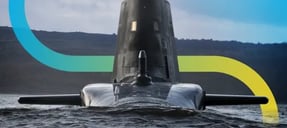
In marine, we hold what we believe to be the only significant UK expertise in submarine steering, diving control and autopilot systems, including for nuclear submarine platforms. The underlying physics applies equally across submarine types but this is a genuinely rare capability, built over four decades and delivered competitively without compromising on rigour.

Our Team

Elite team respected by prime contractors

Modelling and simulation is Stirling’s largest discipline, with the team working across fluids, structures, marine systems, aircraft and control systems. That breadth means a client gets one team capable of modelling an entire system from vehicle level down to individual components, rather than several disconnected specialists who each see only part of the problem.

We run a structured graduate training scheme, pairing new engineers with our senior specialists so they reach a high level of capability quickly, rather than spending years finding their feet. It has proved so effective that a major defence prime contractor has asked us directly what we do differently with our graduates. We put it down to deliberate selection and close mentorship – not luck. We never forget that today’s graduate engineers are tomorrow’s elite experts and we nurture them with pride.

Stirling-Dynamics-engineers-discussing-cockpit-controls-design-on-screen
Capability Leads - Who you will be working with

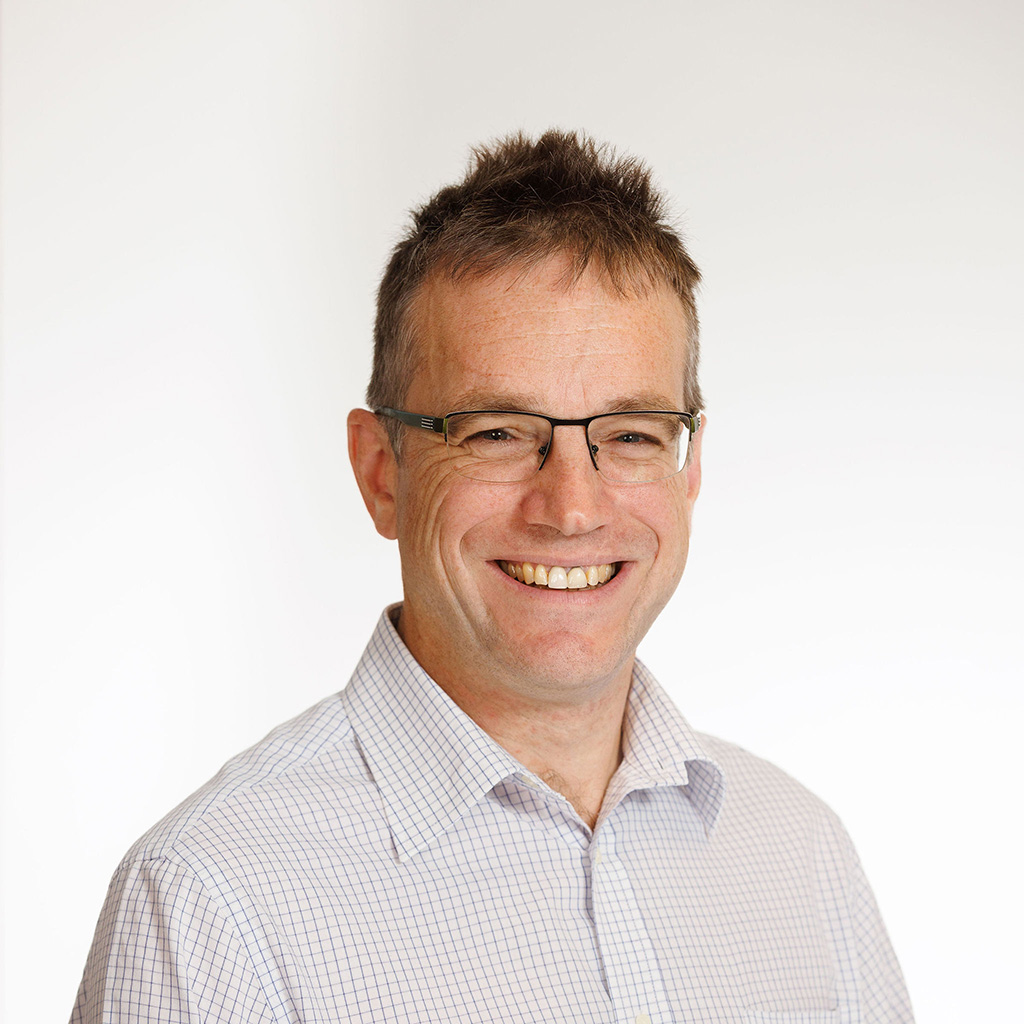
Christopher Bridge

Control and Simulation, Technical Manager

The Control and Simulation team are comprised of a talented group of modelling and control specialists who work across our business areas. Utilising skills in a varied set of simulation tools, we support the design and analysis activities from vehicle level simulation down to equipment level modelling and develop control software deployed to aerospace and marine platforms and our simulation products. We work with some of the world’s largest companies in aerospace, marine, defence, as well as emerging companies developing the latest technologies.
Chris-Bridge-1024x1024px

Bring us your hardest question

Some problems don’t fit neatly into a standard analysis. That’s usually when the right answer matters most. If you’re weighing up a design decision, a modification or a safety case and need evidence you can stand behind, that’s exactly the kind of work we’re built for. And our group can also draw on Stirling’s wider engineering disciplines to carry that answer through to certification, structures or safety – so the question doesn’t stall once the modelling is done.