Pilot Controls & Simulators
Pilot controls that feel exactly like the real aircraft.
Controls that pilots trust
Pilots learn best when a simulator behaves exactly as the aircraft does. From force feedback and control loading to switch action and latency, every interaction influences whether behaviours developed in training transfer successfully to flight. Stirling Dynamics designs, develops and produces ultra high-fidelity pilot controls that recreate the handling characteristics of specific aircraft types, creating immersive training experiences trusted by operators around the world.
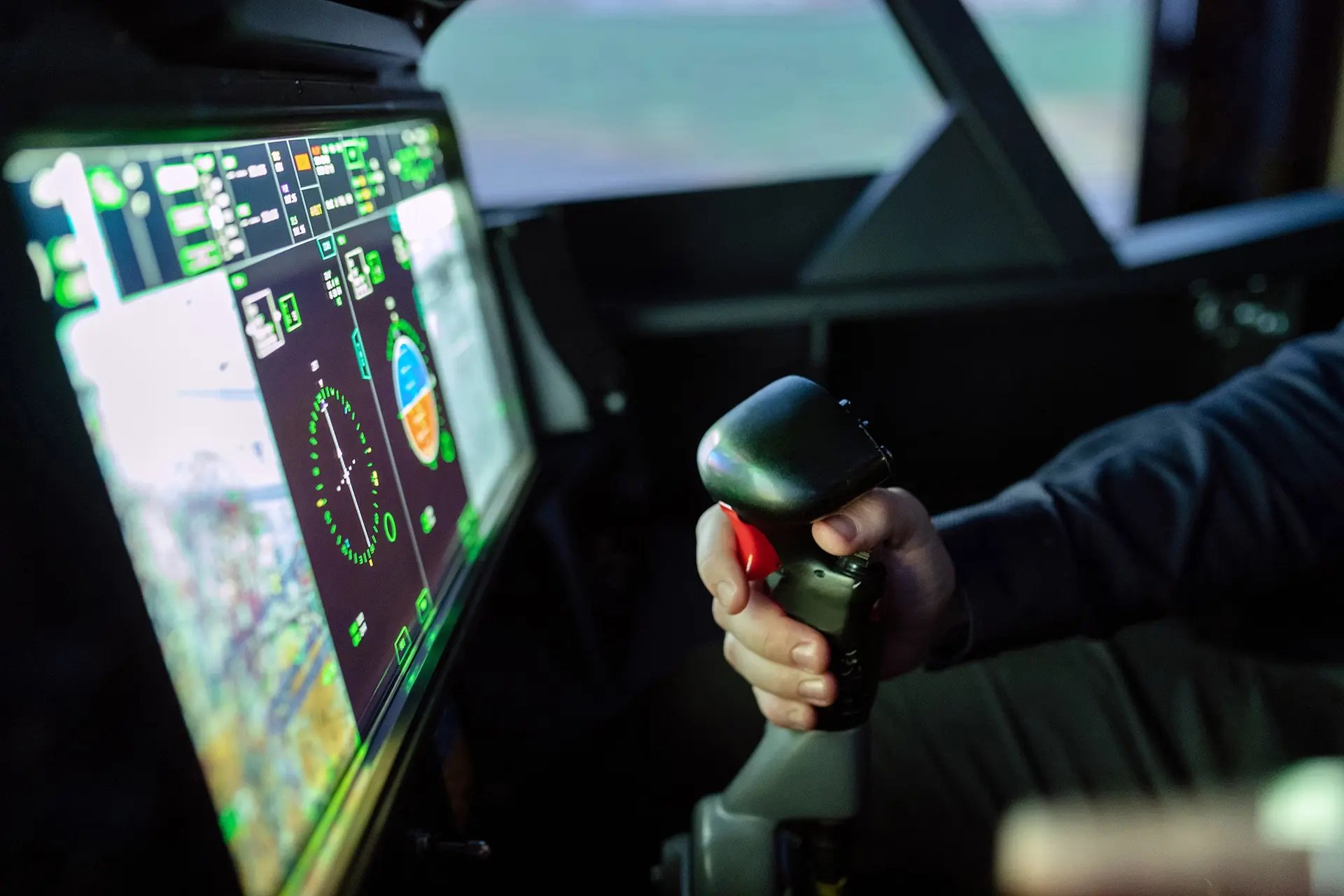
Our active controls immerse pilots in a realistic flying experience by reproducing the changing forces felt throughout a flight. Control loading adapts in real time to factors such as speed, aircraft configuration and phase of flight, delivering authentic handling characteristics from take-off to landing.
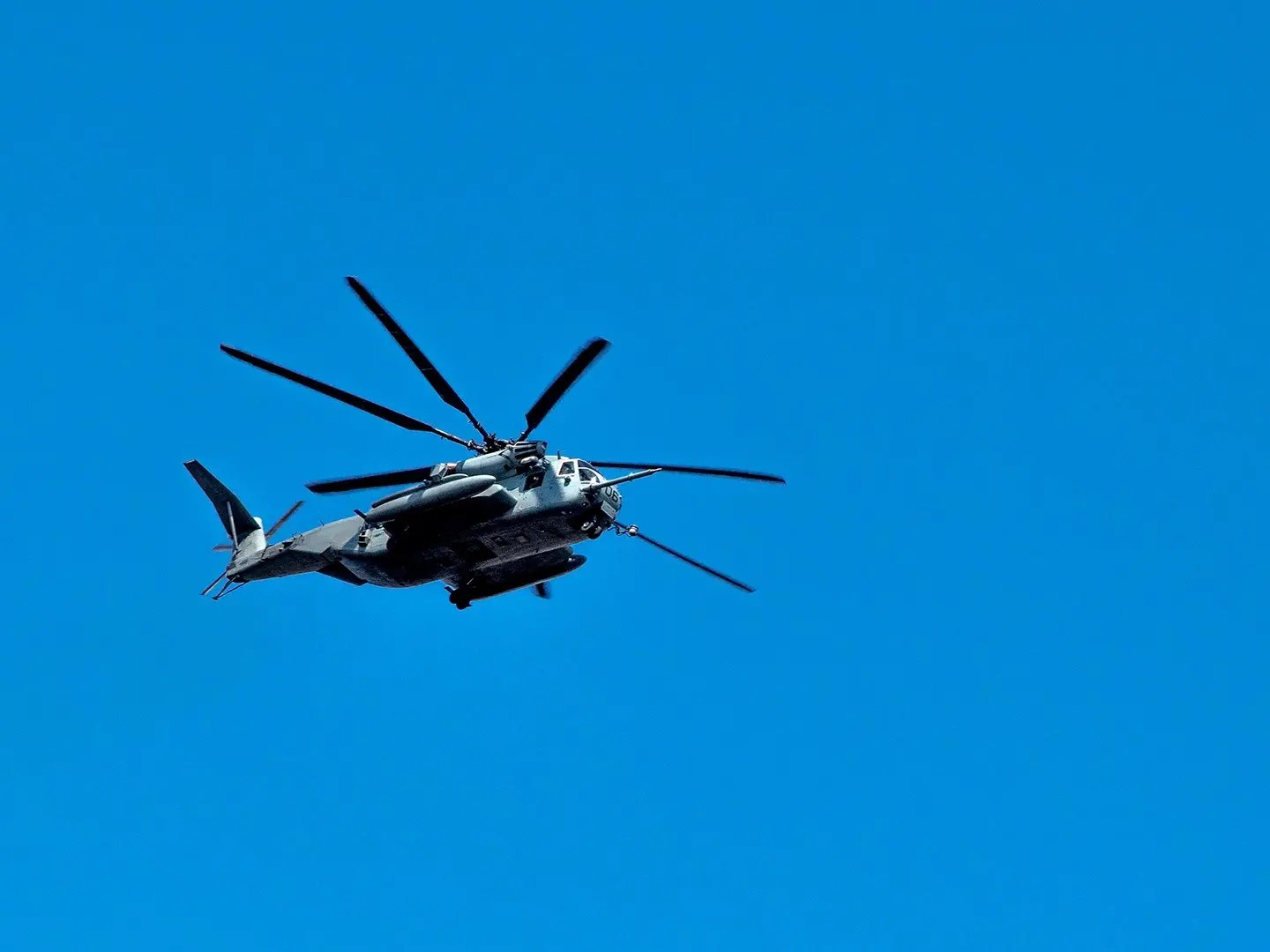
Leveraging decades of aerospace and controls expertise, our flightworthy range offers passive, high-fidelity control systems in a lightweight and compact package. Designed to support certification programmes from the outset, they provide the performance, reliability and redundancy required for operational aircraft applications.
We are also developing a new targeted-fidelity simulator, aligned with the new FCS framework, that offers premium controls in a compact, cost-effective and easily deployable unit – enabling more pilots to gain greater access to advanced simulator training.
High-fidelity feel
Active controls reproduce specific aircraft behaviour through force and haptic feedback, so pilots build habits that transfer to the cockpit.
Highly realistic instructor training
Electronic linking lets two pilots feel each other’s control inputs, and separate units with seat-matched visuals avoid the eye-line problems of a shared vision system.
Options across the range
Our Version 3 range serves the most demanding military simulators, while the newer Version 4 range offers a compact, plug-and-train format at a lower price point with the same configuration tools and immersive feel.
Simple, real-time configuration
Slider bars and graphical curve tools let operators adjust force, feel across the speed range, detents and haptic effects during a session, quickly and easily without specialist engineering support.
Straightforward integration
We supply the hardware and control software, and the interface is designed to connect to most customer systems with limited engineering effort.
Wider access to training
Our targeted-fidelity approach creates compact, lower-cost simulators with high-fidelity touchpoints. Trainees can get more simulator time, and live flying hours can be used where they add the most value.
Simulator and flightworthy controls
The best simulator controls are the ones pilots never notice. To deliver truly effective training, controls must provide the same look, feel and handling characteristics as their flightworthy counterparts, creating an immersive and authentic pilot experience.
Beneath the surface, however, the requirements diverge significantly.
Flightworthy controls
Flightworthy controls must meet rigorous airworthiness and certification standards, with enhanced redundancy, environmental resilience, and strict size and weight considerations for aircraft integration.
Simulator controls
Simulator controls are engineered specifically for training use, reproducing the operational experience of the aircraft while avoiding unnecessary certification and aircraft installation requirements. The result is high-fidelity training realism delivered in the most practical and cost-effective way.
Configurable without specialist engineering
Our controls are configured through a simple, user-friendly interface. Easy-to-read settings are configurable through various means including slider bars that adjust force feedback to make a control heavier or lighter. Graphical curve tools shape control feel across the range of motion while additional qualities may be controlled across a speed and performance range. Detents and haptic effects can be added or modified, and changes can be made in real time while the control is in use. A trainer or test pilot can refine the feel in real time during a session – without a specialist engineer present.
Electronic linking for instructor training
Stirling Dynamics’ electronically linked, back-driven controls deliver an authentic shared cockpit experience for instructors and trainees. Control movements, forces and aircraft responses are replicated seamlessly between stations, providing the tactile and behavioural cues expected from the real aircraft.
By allowing each user to operate with a visual system aligned to their own seating position, linked controls maintain visual fidelity while preserving full synchronisation between crew members. Instructors can demonstrate techniques, monitor inputs and take control with complete confidence, creating a training environment that is both more representative and more effective.
The combination of immersive visual cueing and fully synchronised controls enhances crew coordination, strengthens handling skills and delivers the high-fidelity training experience demanded by today’s aviation and defence operators.

Integration into your simulator
We supply the physical controls, the control specific software and the control law elements that govern how the controls respond to aircraft behaviour. You supply the flight model and the wider simulation environment, such as weather and scenery. The interface is designed to connect to most customer systems without extensive engineering effort.
Version 3 and Version 4 controls
Version 3
Our Version 3 controls are trusted on the F-35 simulator programme and have accumulated years of operational service. Designed for the most demanding military training environments, they use rack-mounted ruggedised hardware, military-standard cabling and aircraft-equivalent force fidelity. More than 1,000 controls have been delivered worldwide.
Version 4
Our Version 4 controls respond to demand from the growing mid-range simulator market. The control modules are compact and can be mounted vertically or horizontally. They use a laptop-sized power supply and standard connectors, so cabling routes around tight spaces more easily and installation is simpler. Modules are plug-and-play, which means a unit can be replaced quickly. Version 4 sits at a competitive price point while keeping the same features that makes our Version 3 range so successful.
Targeted fidelity: high-fidelity controls in a compact training device
Between a full-motion Level D simulator and a joystick connected to a desktop PC sits a gap that many training organisations know well. Full-motion devices deliver exceptional realism but are costly and few in number, so access is limited. Low-cost devices are easy to deploy but rarely give a pilot the control feel needed to build habits that transfer to the aircraft.
Our targeted-fidelity simulator is designed for that gap. The principle is simple: put the fidelity where the pilot actually interacts with the aircraft. We retain our active controls and the essential touchpoints, and we remove cockpit detail that does not contribute to the training task while maximising pilot immersion. Mixed-reality and virtual-reality visual systems then provide an immersive environment without the space and cost of a dome.
Higher fidelity, lower costs
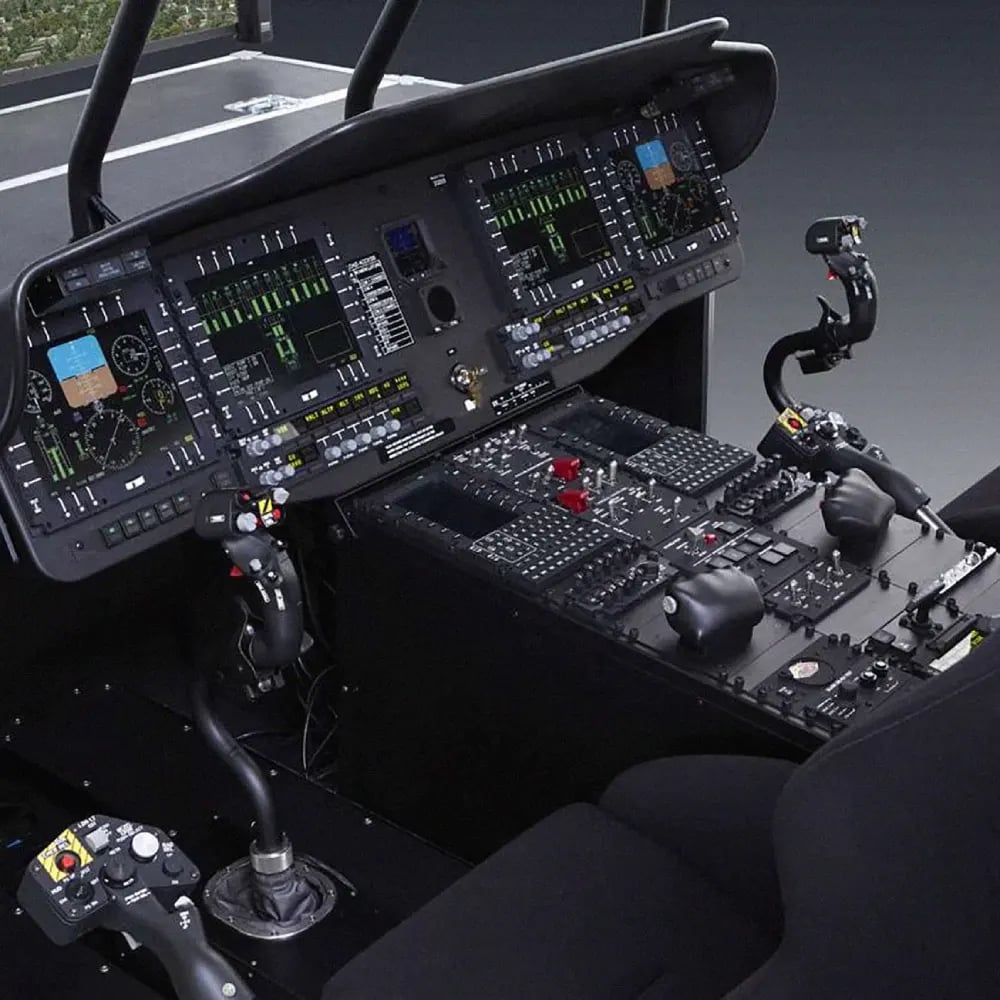
High-fidelity active controls sit in a compact, wheeled simulator with a scenario display and a mixed reality or virtual reality visual option. The unit combines a variety of control options from our V4 range with a processing PC and a display for basic training, with a VR headset option for more advanced scenarios.
We also have the option of a multifunction display touchscreen for aircraft-specific simulation. The stick can be configured for fixed-wing, rotary-wing or AAM/eVTOL aircraft; additional panels may be installed to carry items such as gear and flap levers. The aim is a lower cost device that can be installed in greater numbers than a full-motion simulator – so that more trainees get more simulator time (and live flying hours are used where they add the most value).
The unit is far smaller and less costly than a full motion simulator so organisations can install several in place of one. More devices at more locations mean more opportunities for practice, including informal sessions between scheduled training. Greater simulator exposure can help to reduce the demand on live flying hours, with the associated benefits for fuel use and aircraft availability.
The same approach extends to remote-piloted air system ground stations. A unit could be housed in a vehicle or ISO container and deployed to operational locations, with haptic cues such as stall warning and overspeed represented for the operator. Certification requirements in this area continue to evolve, and we will work with customers to meet the standards that apply to their programme.
Safety-critical drills
The procedures practised in a simulator are often safety critical, even when the training device itself is not. Whether teaching emergency handling, unusual attitudes or time-critical responses, the simulator must reinforce the same behaviours expected in the aircraft. Our controls are designed to deliver authentic force and tactile cues so that training translates directly into operational performance.
Active controls for drones
We are developing active controls for drone operation, using the same force-feedback technology as our simulator range. Haptic cues such as stall warning and overspeed can be represented for the remote pilot, and a control station can be housed in a vehicle or container for deployment to operational locations. Certification requirements for remotely piloted aircraft are still evolving, and we will work with customers to meet whichever standards apply to their programme. We also support advanced air mobility developers, and we can discuss flexible commercial arrangements to support development and certification activity.
Contact our team to arrange a demonstration and discover how Stirling Dynamics can enhance your simulator, training system or flight control programme.