



Core capabilities

Structural & Fluid Dynamics

gradient-strip

Let’s Build the Future

Structural and fluid dynamics work rarely announces its own value. There’s no dramatic image attached to a validated icing model, no headline moment when a certification authority accepts a substantiation package built on decades of specialist experience. Yet this is exactly the work that keeps expensive flight test hours off the schedule, gives clients the confidence to depart from conventional design assumptions when the numbers justify it. And it resolves the kind of structural dynamics problems that surface during test flights. Stirling Dynamics brings genuine technical depth to bear on these problems, sized and scaled to match what the challenge actually demands.

S-Icon-blue
Solve problems you can’t yet fully define

Stirling’s structural and fluid dynamics consultancy model is built for ambiguous, high-stakes challenges (not just fixed-scope tasks) – guiding clients from early concept through to certification.

S-Icon-blue
Access world-class expertise in rarefied specialisms

Decades of hands-on experience in specific technical areas such as aeroelasticity and Global Finite Element Modelling, not generalist capability dressed up as a domain expertise.

S-Icon-blue
Resolve structural dynamics issues quickly and reliably

Practical problem-solving backed by engineering depth rather than trial and error.

S-Icon-blue
Reduce flight test cost and risk

Validated icing simulation and CFD modelling replace expensive, time-consuming physical testing with trusted digital alternatives.

S-Icon-blue
Push past conventional limits, with regulatory confidence

Rigorous substantiation supports departures from established industry assumptions, unlocking better performance without compromising safety or certification – and a track record with certification authorities helps clients to demonstrate that sufficient substantiation exists to warrant approval.

S-Icon-blue
Work with a team sized to the problem

On complex programmes, Stirling’s team can outscale your own. We have your back.

Consultancy and embedded

For the problem you can define and the one you can’t

Some problems arrive fully formed: a component needs modifying, a load case needs clearing, a CFD run needs completing. Others arrive as little more than a partially formulated question: you think your platform concept is possible but you don’t yet know how to prove it. Stirling Dynamics’ Structures and Fluid Dynamics team is built for both scenarios.

That dual role matters. As a standalone consultancy, clients bring us problems directly, sometimes taking the work all the way through to engagement with the certification authorities. As an embedded discipline, our structures and fluid dynamics specialists sit inside wider multidisciplinary teams across Stirling’s other sectors, from landing gear to cabin systems, providing the underlying aeroelastic and CFD analysis those programmes depend on. Either way, the same engineers, the same rigour and the same standard of substantiation apply.

Clean_1011_engineOFF@02500_Scene 1
Consultancy

Consultancy: Deep Specialist Experience

What sets this team apart is the calibre of problem that clients bring us. We’re rarely asked to deliver two months of routine analysis against a fixed scope. More often, the conversation starts with a client saying: we have a problem and we don’t yet know what the solution looks like.

In practice

That’s the point at which our deep, specific experience earns its keep. Our current work with a major aviation client illustrates this well. Stirling’s team (larger than the client’s own) is guiding the complete development of a new platform over a development horizon measured in years, not months – covering work that hasn’t been attempted in this form before. This is consultancy in its fullest sense: helping a client to formulate a problem they cannot yet fully articulate themselves, then staying with it from early concept through to a certifiable platform.

Fluid dynamics

Fluid Dynamics, Properly Applied

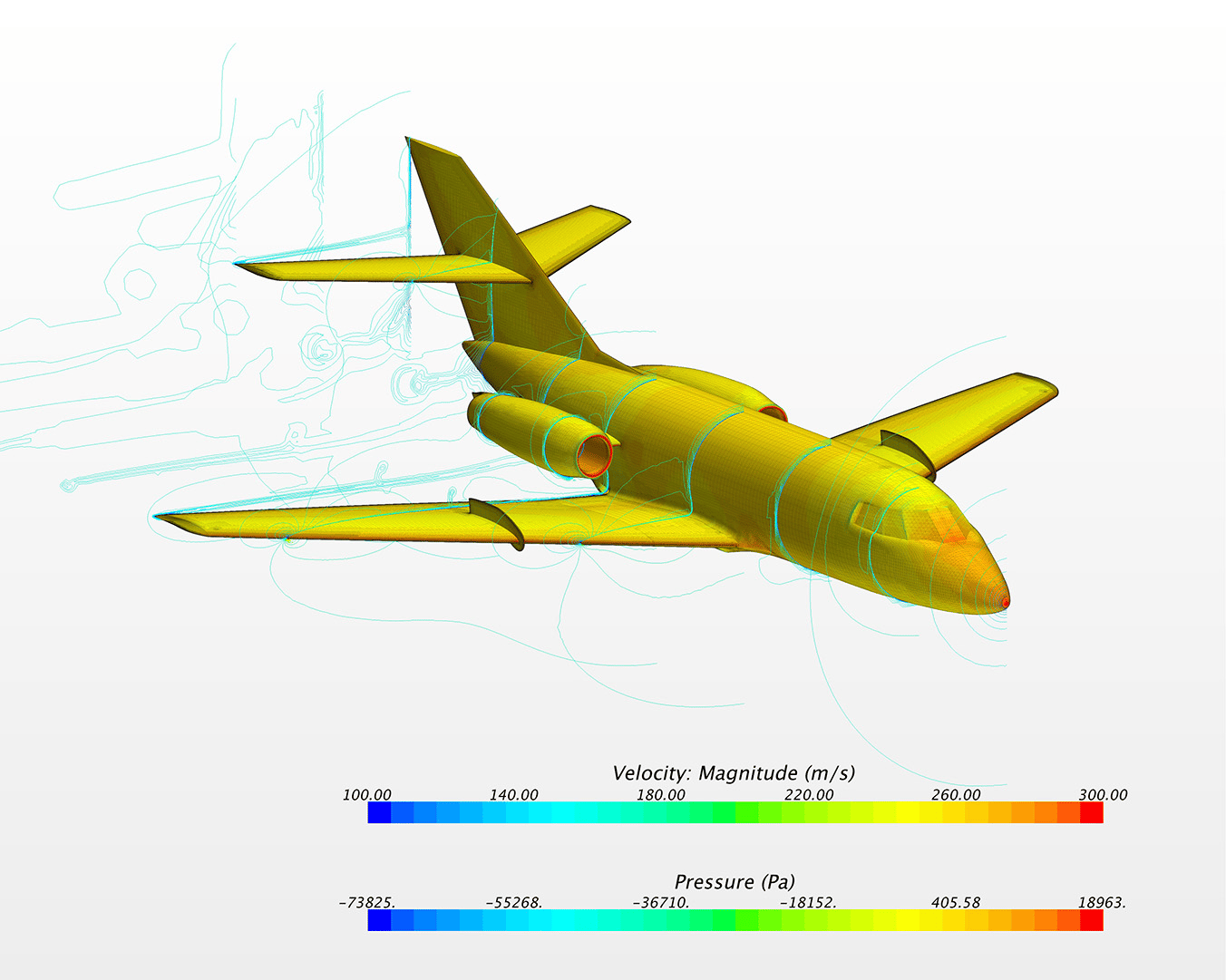
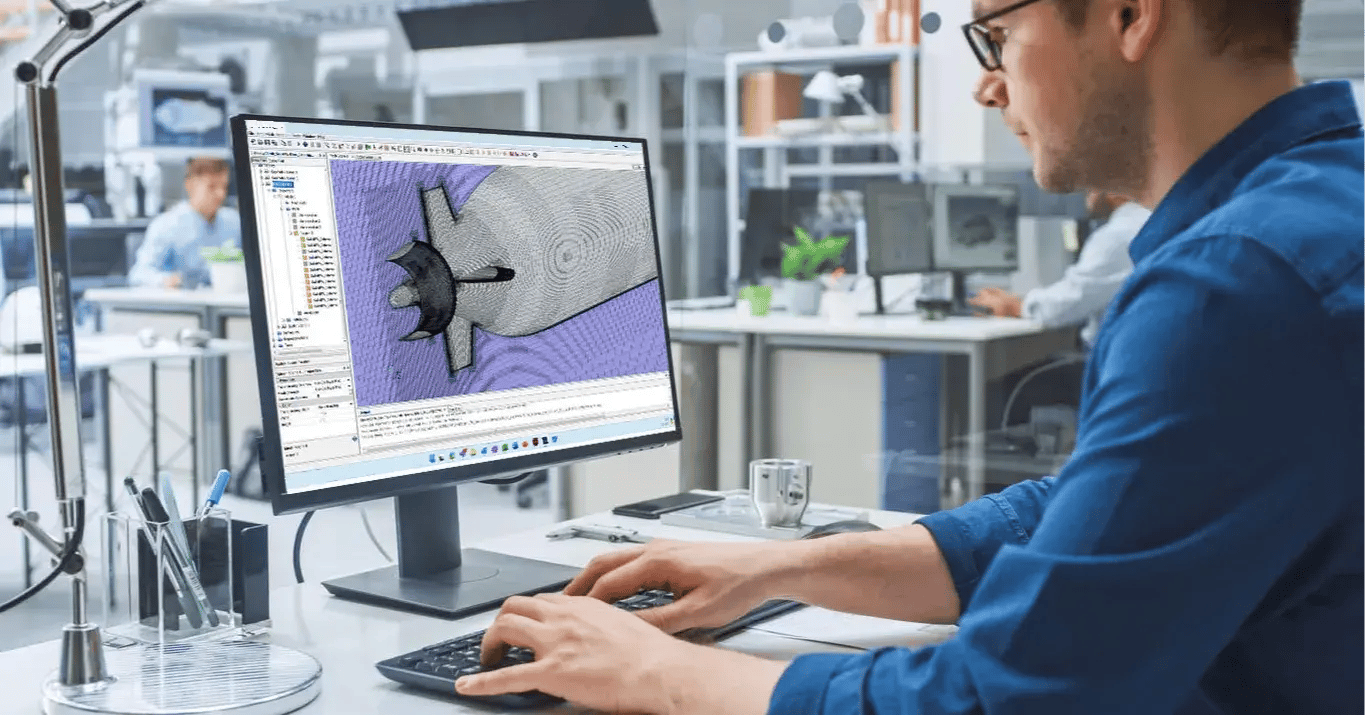
Computational fluid dynamics remains one of the more visible parts of what we do – and for good reason. Our CFD capability supports new aircraft programmes, aircraft modifications and reverse engineering work, using industry-standard solvers alongside our own in-house high-performance computing resource. But the depth of the work goes beyond routine flow analysis.

Aircraft icing

Aircraft icing is a key example. Detailed icing simulation reduces reliance on costly physical flight testing but only if the underlying models can be trusted. Developing that trust has meant working closely with software providers to understand – and in places improve – the codes involved, so that digital simulation becomes a reliable substitute for flight test rather than an approximation of one. Some may perceive this aspect of the work as unglamorous (we don’t) because it isn’t as visually striking as pure CFD – but it’s the kind of mathematical modelling that shifts risk and cost out of a certification programme.

Structures

Structures and Aeroelasticity

Global Finite Element Modelling

If CFD is the visually striking end of this discipline, structures and aeroelasticity are its mathematical backbone, and no less important for being harder to picture. Global Finite Element Modelling of entire airframes sits here: complex, demanding work that appeals directly to engineering organisations that understand what’s involved in modelling a whole aircraft structure rather than a single component.

Aeroelasticity

Aeroelasticity is where some of our most interesting work is currently happening, precisely because most of it sits outside what the standard textbooks cover. Conventional wisdom, established over decades by the major airframers, has held that control surface geometries beyond a certain configuration simply won’t work safely.

We’ve challenged that assumption directly and demonstrated that shapes beyond the traditional boundaries can work, while improving both safety margins and passenger comfort. Proving that kind of result requires more than confidence; it demands substantiation robust enough to satisfy engineers and regulators who have every reason to be sceptical of a departure from established practice.

Structural dynamics

Structures and Fluid Dynamics: Resolving the Tension

In practice

Structural dynamics failures don’t announce themselves gently. In one recent programme, an eVTOL encountered severe nose landing gear shimmy during flight testing. At initial touchdown speed, the gear oscillated badly enough to risk structural damage. The developer called on our team to redesign the shimmy damping system; subsequent flight testing confirmed the improvement.

It’s a useful illustration of a broader point: structures and fluid dynamics frequently pull against each other, since what improves aerodynamic performance often compromises structural efficiency and vice versa. Resolving that tension, particularly on unconventional modern airframes, is a core part of what this team does.

The future

Where this is heading

When conventional wisdom becomes a constraint, achieving the right result can sometimes involve a revolutionary solution. On this basis, some of our current structural work would astound some conventionally trained engineers. Solutions such as these are justified by the efficiency gains they unlock – in some cases substantial reductions in fuel burn. They will require new terminology in places because existing aero-engineering vocabulary doesn’t yet describe the new reality we are helping our clients to create. Certification authorities will rightly expect rigorous proof before any of this reaches service. That proof is exactly what this team is built to provide and once it exists, the wider industry stands to learn something genuinely new. The first public sight of this class of platform is still some years away but the groundwork is being laid now.

Marine

Marine Applications

Aerospace and marine fluid dynamics share some underlying tools and there’s genuine crossover in areas such as submarine hydrodynamics. But the two disciplines shouldn’t be treated as interchangeable. Water and air behave differently enough that knowledge doesn’t transfer reliably in either direction and most of our marine-related work sits within defence programmes, with the security constraints that implies. Where crossover exists, we use it; where it doesn’t, we don’t pretend otherwise.

CFD on Screen 1-update system-1
Our clients

Why Clients and regulators return to Stirling

Certification authorities and client engineering teams both see this work directly. What they consistently value is a combination of innovation in method as well as outcome, agility that avoids unnecessary learning curves, and consistency of quality across every deliverable. When an authority approves work of this standard, it builds the client’s own confidence in taking that work forward.

  • Innovation in method as well as outcome
  • Agility that avoids unnecessary learning curves
  • Consistency of quality across every deliverable
Capability Leads - Who you will be working with

Kaushil Solanki

Chief Engineer and acting Technical Manager for Structural and Fluid Dynamics

The Structural and Fluid Dynamics team delivers expert analysis in loads, aeroelastics, and aerodynamics to support safe and certifiable aircraft design. From concept to certification, we apply specialist knowledge in manoeuvre loads, gust response, flutter, and ground load interactions. Using tools like ANSYS, NASTRAN, and Simscape, along with in-house models, Stirling Dynamics supports a wide range of platforms including airliners, jets, helicopters, and eVTOLs. Our core capabilities are enhanced by services such as thermal modelling, bird strike evaluation, and icing analysis, ensuring compliance and confidence in design reviews.

Kaushil-Solanki-1024x1024px

Bring us your toughest problem

Plenty of organisations claim specialist capability. But what genuinely distinguishes this team is the combination of decades of hands-on experience with a number of highly specific technical problems. That’s not easily replicated and it’s the reason clients bring us their hardest questions, rather than their routine ones. It’s why you should too.