Sectors

Space

Spaceflight electronics built once, built right, with aerospace discipline.

Speak to a specialist

gradient-strip

Space hardware is built once and then left alone. There is no maintenance visit, no line-replaceable unit and no second attempt at launch. Every decision made on the ground must hold for the life of the mission.

That is the standard Stirling Dynamics has worked to for more than three decades, designing safety-critical electronics, controls and systems for aircraft and submarines. Stirling’s space work is comparatively new. The engineering discipline behind it is not.


S-Icon
UK design capacity for UK-funded work

A UK engineering base helps customers to deliver their share of European Space Agency (ESA) and national programme work where space electronics capacity is stretched.

S-Icon
A design record that stands up to review

V-model traceability links every requirement to evidence, so each design choice can be defended at every review, supporting qualification.

S-Icon
Proven process maturity from safety-critical aerospace

Customers benefit from Stirling’s DO-254 electronics development, DO-160 environmental qualification, AS9100 accreditation and EASA.21J.807 design approval, applied to European Cooperation for Space Standardization (ECSS) requirements.

S-Icon
Hardware that works first time and keeps working

Motor controllers, thermal controllers and cryocooler drive electronics are taken from proven concept to spaceflight standard for missions where repair is impossible.

S-Icon
Lower programme risk from the start

Early commercial-part breadboards prove concepts before qualified parts are committed. Modelling, hardware-in-the-loop testing and model-based verification then resolve design questions while they are still inexpensive to change.

S-Icon
Flexible engagement that fills specific gaps

Customers keep their space heritage and programme relationships, and add complete unit design, design assurance or extra engineering capacity as the programme needs. Obsolescence redesign keeps heritage hardware in service.

raytheon-logo lockheed-logo kai-logo qinetiq-logo bombardiar-logo hyundai-logo Airbus Logo mits-logo
The UK Market

A capability gap in UK space electronics

Through its ESA subscription, the UK expects a return of industrial contracts broadly in line with its contribution. Winning that work depends on having the capacity to deliver it, and in space electronics that capacity is stretched. Satellite builders (and European space companies establishing UK operations) increasingly need partners who can design high-integrity electronic hardware in the UK – to a recognised process, and with the evidence to prove it.

Stirling’s decision to enter this market followed conversations across the UK space community that pointed consistently to electronic hardware as the principal constraint on programme delivery. The components themselves are well understood. The shortage is in engineering teams able to take them to spaceflight standard – and with a design record that will stand up to scrutiny.

Discipline

Why aerospace discipline transfers

In civil aerospace, catastrophic failure conditions must be shown to be extremely improbable, typically of the order of 10⁻⁹ per flight hour. Meeting that target has little to do with clever circuitry. It comes from requirements that are complete and verifiable, the correct architectures, parts that are selected with care, and a verification record that links every requirement to evidence.

Space programmes arrive at the same rigour for different reasons. Spacecraft cannot be conveniently repaired; missions run for many years and the environment is actively hostile to electronics. The frameworks differ, with ECSS governing ESA programmes, NASA standards applying where specified and DO-254 and ARP4754A in civil aerospace. But the underlying philosophy is recognisably the same: define what the hardware must do, design it to be robust and prove that it is.

Our team

Our Software and Electronics team develops airborne electronic hardware to DO-254, with environmental qualification to DO-160. Stirling is a member of the invitation-only DO-254 User Group Europe. That process maturity is what a space programme is buying.

10⁻⁹ Per flight hour
The frameworks
ECSS
ESA programmes
NASA standards
Where specified
DO-254 · ARP4754A
Civil aerospace
Capability

Electronics that Stirling can design for space

Much of the electronics on a spacecraft is conceptually simple. Motor controllers for solar array deployment and pointing mechanisms, temperature controllers for thermal regulation, drive electronics for cryocoolers and bespoke units built around a specific payload are rarely novel in function. What makes them difficult is that they must work first time and keep working, in conditions that no commercial component was designed for.

That is the problem that Stirling addresses. The value lies not in new technology but in applying a rigorous, evidenced design process to proven concepts, so that a straightforward unit becomes a space-worthy one.

The approach holds whether the destination is low Earth orbit, geostationary orbit or deep space. Earth observation, communications, science missions and long-duration payloads each impose a different environmental envelope – but reliability remains the organising principle throughout.

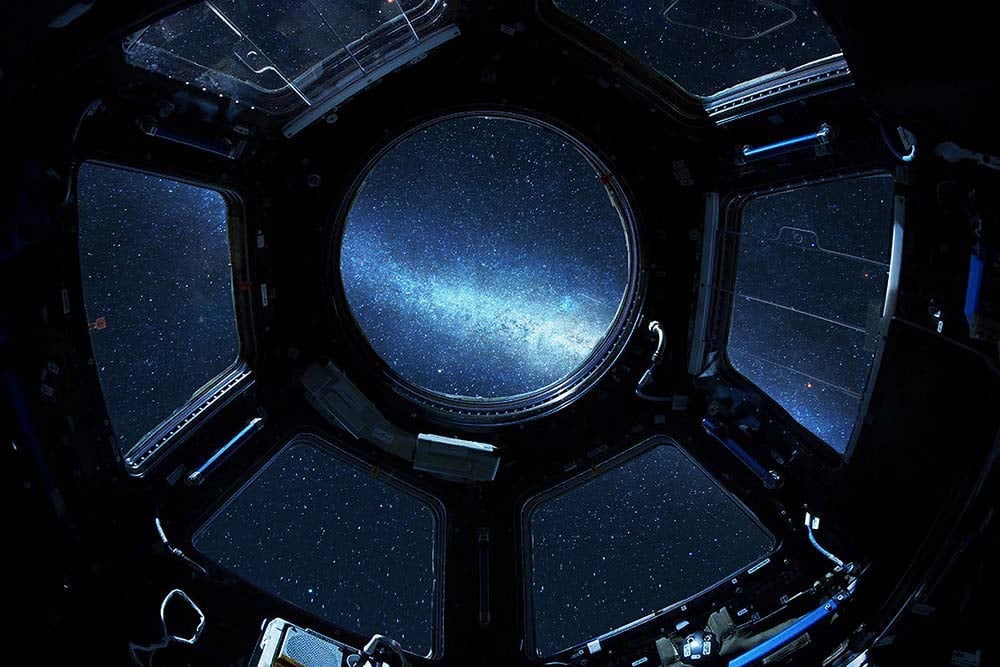
Stirling-Dynamics-Space-ISS-window-starry-1000x667px
Lifecycle

From concept to space flight standard

Our engineers follow a V-model lifecycle with traceability from top-level requirements through design, implementation and test. For space electronics this typically begins with a functional breadboard built from commercial parts. This proves the circuit concept quickly and economically before expensive qualified parts are committed.

The design then moves towards spaceflight standard. Each terrestrial component is replaced with a space-qualified equivalent, selected for radiation tolerance, thermal range and outgassing behaviour, and derated to suit the mission. Every substitution is assessed and verified to confirm that design intent has been preserved.

Radiation is addressed at two levels. At component level, parts are chosen for their total ionising dose performance and susceptibility to single-event effects. At system level, redundancy and fault-tolerant architecture ensure a single failure does not end the mission, with reliability analysis quantifying the probability of coincident failures. Thermal extremes, contamination control and launch vibration and shock are handled through the same structured process, from materials and interconnect selection to handling and build requirements.

The result is a design that can be defended at every review, with evidence that each choice meets its requirement.

Obsolescence

Keeping heritage hardware in service

Recurring builds, follow-on missions and ground segment systems often depend on electronics designed decades ago around components that are no longer available. Stirling’s obsolescence management work redesigns legacy units with modern equivalents, reverse engineering the original design intent where documentation is incomplete, while protecting the qualification basis that makes the hardware usable.

Working together

A partner for growing space businesses

We work best alongside satellite and subsystem builders that have secured ESA or national programme work and need specialist electronics capability they do not hold in-house. That might mean designing a complete unit, providing design assurance for a partner’s own hardware or adding engineering capacity to meet a programme milestone.

The model is collaborative. Customers bring space heritage, mission knowledge and the programme relationship. Stirling brings a mature high-integrity design process, a UK engineering base and the documentation needed to support qualification. Stirling is also taking part in the UK Space Agency Accelerator programme for organisations moving from aerospace into space.

gradient-strip
Modelling and simulation

Modelling and simulation in support

Our modelling and simulation capability, developed across aircraft and submarine programmes, supports space electronics work where it adds value. Dynamic models of mechanisms and thermal behaviour, hardware-in-the-loop testing and model-based verification help programmes to reduce their dependence on late physical testing, and resolve design questions while they are still inexpensive to change.

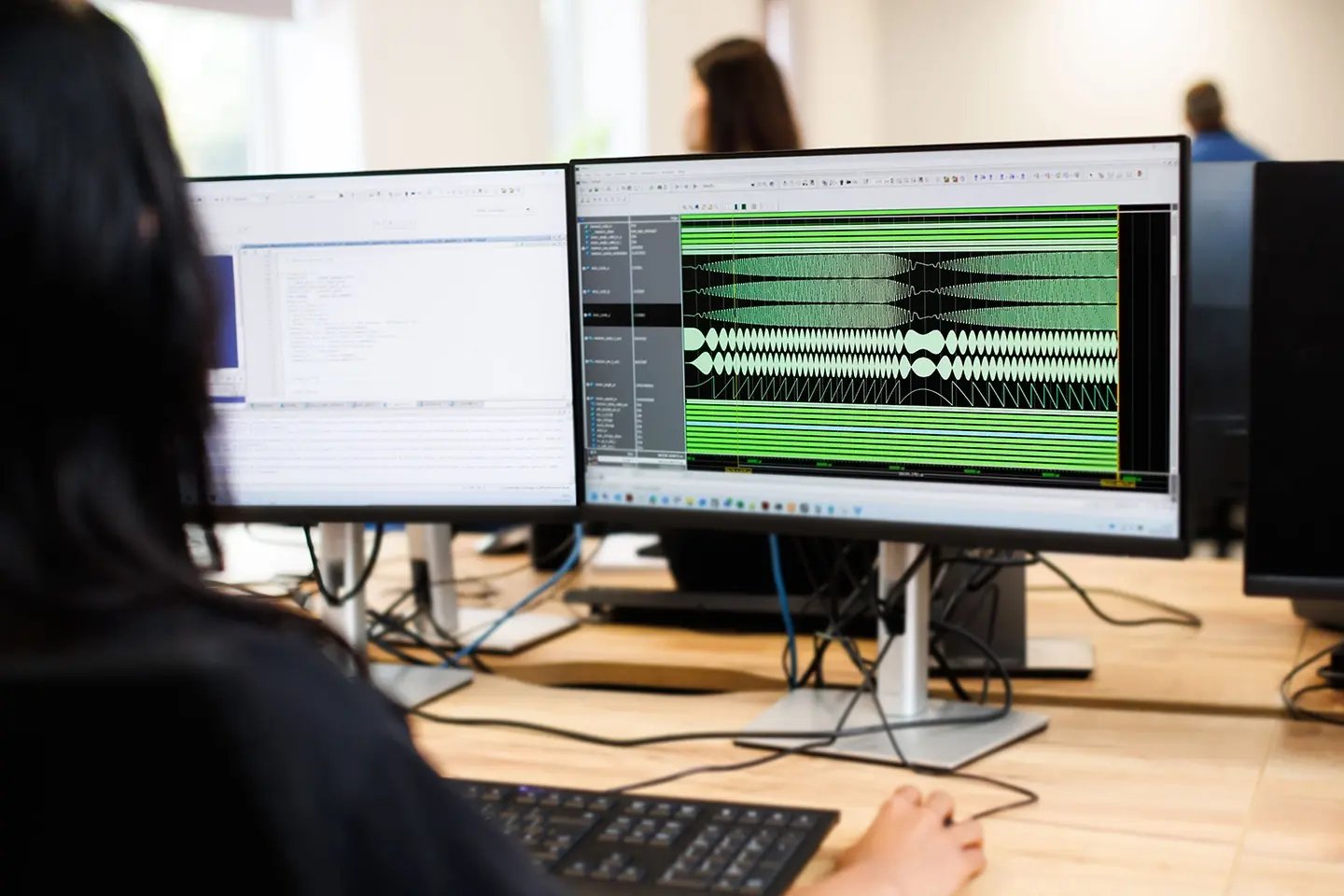
Stirling-Dynamics-Software-Electronic-Hardware-Woman-Engineer-Screen
Approvals

Assured by process

Stirling Dynamics is an EASA Part 21J approved Design Organisation (EASA.21J.807) and holds AS9100 accreditation, with Systems and Safety operating as a separate function from Compliance and Certification. As part of the Expleo group, Stirling combines the focus of a specialist engineering consultancy with the resources of an international engineering and technology group.

If your programme needs flight electronics designed to a standard you can evidence, speak to our electronics team early, while architecture decisions are still open.

Talk to us

Talk to Stirling’s space electronics team

If you are building satellites or subsystems under ESA or national programmes and need specialist electronics capability you do not hold in house, Stirling can design, assure or add capacity to meet your programme needs.

If you are a European space company establishing UK operations and looking for a UK engineering partner with a mature high-integrity design process, we are ready to support your bids and programmes.

Get in touch