From the air to the sea, we support complex civil and defence programmes across aerospace, marine and space, helping customers solve critical engineering challenges with confidence.
Specialist engineering and consultancy for the marine sector
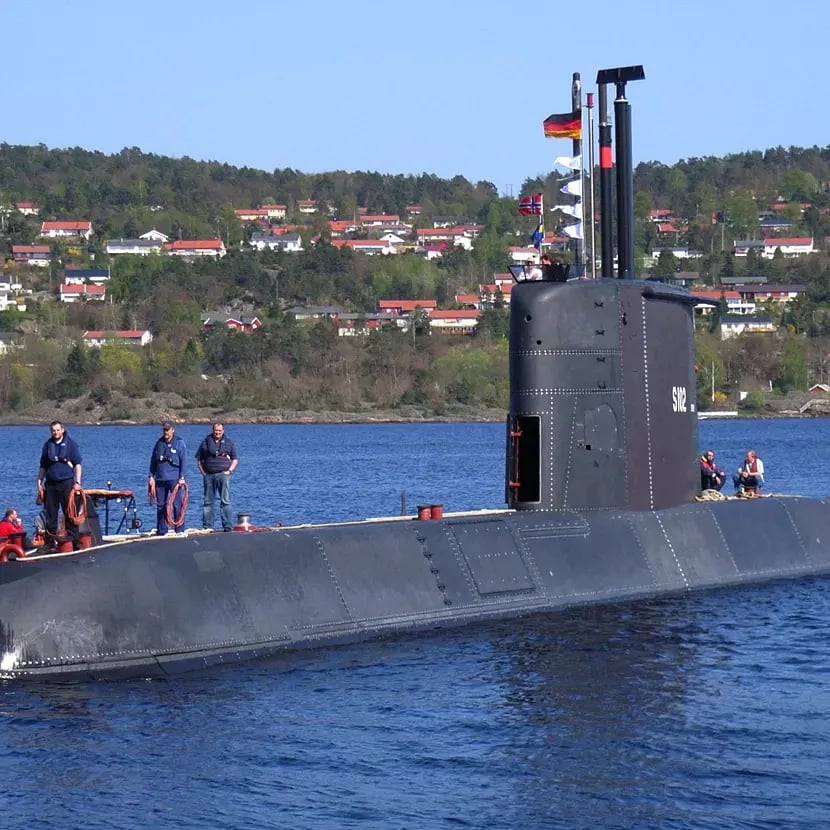
Submarine and marine platforms operate in an environment that offers no margin for approximation. Stirling Dynamics has built its reputation in this sector on submarine autopilot and platform management systems, supporting programmes where the cost of getting a control law wrong is measured in more than budget or schedule. Our engineers work across the full lifecycle, from early requirements definition through design, verification and into through-life support, on platforms ranging from large nuclear submarines and surface ships to smaller autonomous and uncrewed vessels.
We work in whichever capacity a programme needs us. On some contracts we take on full platform management system responsibility; on others we’re brought in by a prime contractor or integrator for our depth of expertise in a specific discipline, such as steering, diving or hover control. For smaller, more agile platform developers, we work directly – applying the same rigour we bring to established naval programmes. That flexibility, rather than a fixed way of working, is what most of our customers value.
Flexible engagement, matched to the programme
We work as specialist subcontractor or direct partner, so customers get the right level of involvement rather than a one-size engagement model.
Control systems built around the mission, not the catalogue
Requirements are defined from the customer’s actual operating environment and objectives, giving a system engineered for the platform’s real conditions, rather than adapted from something generic.
Integrated modelling before physical testing
Dynamic systems modelling, computational fluid dynamics and hardware-in-the-loop simulation let customers validate performance and safety before committing to sea trials, reducing cost and risk.
Proven across platform types and conditions
Experience spanning crewed submarines to smaller autonomous vessels, and diesel-electric through to nuclear-powered fleet platforms, across multiple configurations including X-plane, sail plane and bow plane.
Safety and verification rigour from day one
Validation and verification start at the first requirements conversation, reducing downstream risk and rework on safety-critical systems.
Support for the platform’s whole life, not just its launch
Continuity from requirements definition and design through upgrades, sea trials and obsolescence management, so customers aren’t left managing a system alone once it’s delivered.
Contol systems
Submarine control systems
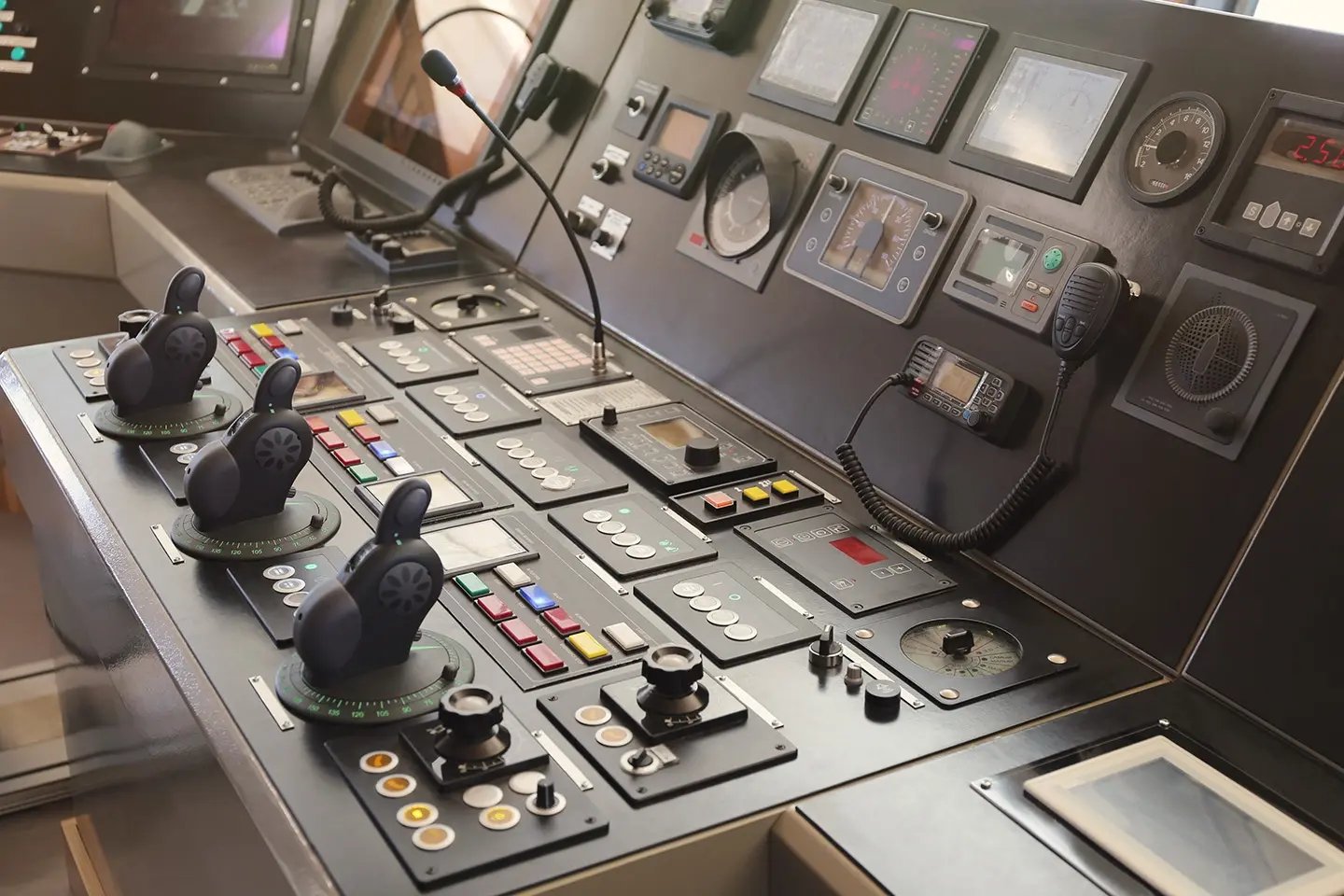
Steering, diving and hover control sit at the heart of what we do. Our engineers design and develop autopilot systems across a wide range of submarine configurations, including X-plane, sail plane and bow plane arrangements, and across propulsion types from diesel-electric patrol boats to nuclear-powered submarines.
FASC
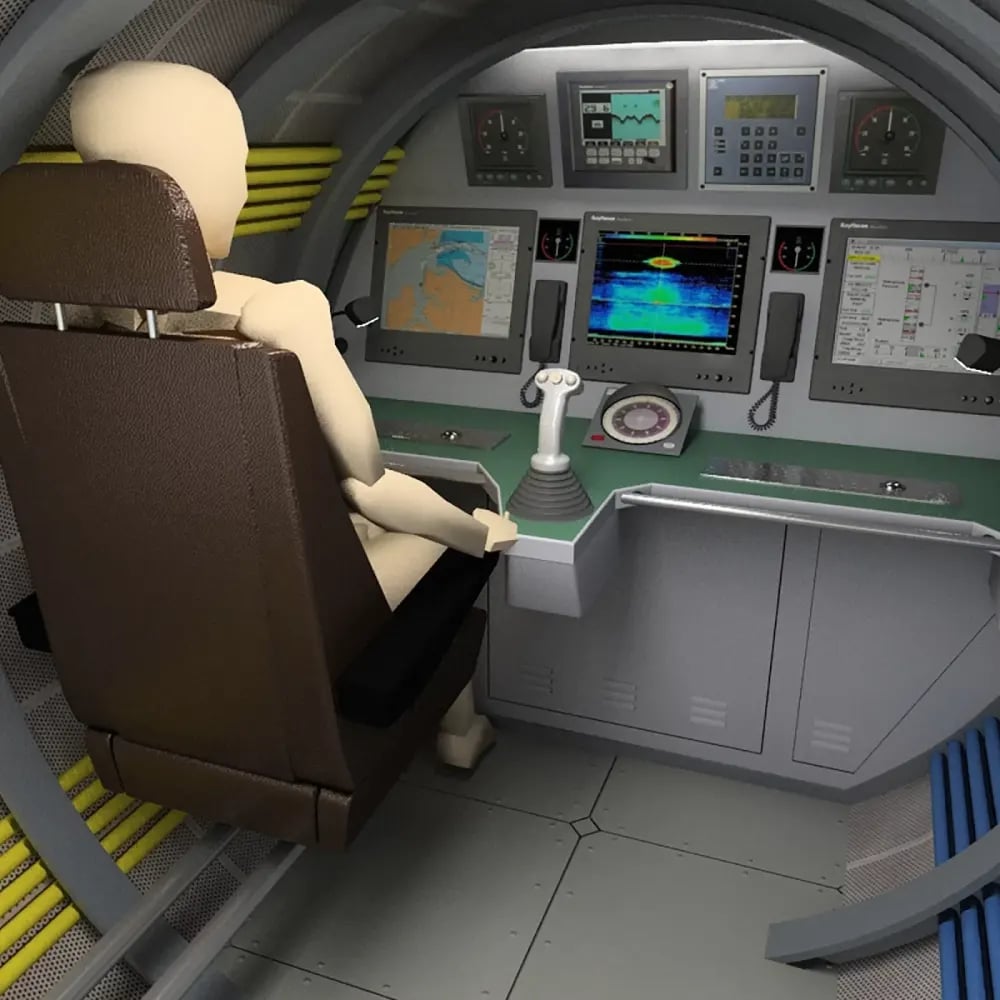
Our Full Authority Submarine Control (FASC) technology combines control laws with a human-machine interface designed to reduce operator workload without removing the operator from the loop. It sits between manual control and full autonomy, opening up mission profiles that would be difficult to sustain with a fully manual system alone, while keeping a qualified operator able to intervene at any point.
Every control system starts from the platform’s operational reality, rather than a generic specification. A customer might come to us with a challenge (such as a small submarine intended to carry special forces personnel) and a set of operating parameters: the sea states it needs to handle, whether it must be capable of seabed landing, and the sensor and weapon systems it must integrate with. We then define what the control system needs to do to meet that brief, from basic stability augmentation through to full authority control.
Submarines increasingly operate in environments that are harder to predict than they once were, including under Arctic ice, where changing ice conditions add a further layer of operational complexity. Whatever the environment, the common engineering thread is the same: control systems have to deal with constantly shifting conditions, in particular water salinity and temperature and – when the submarine is on or near the surface – sea state. Systems must account for thermoclines, haloclines and pycnoclines. All these dynamics must be built into the control laws from the outset, rather than compensated for afterwards.
Propulsion
Marine propulsion
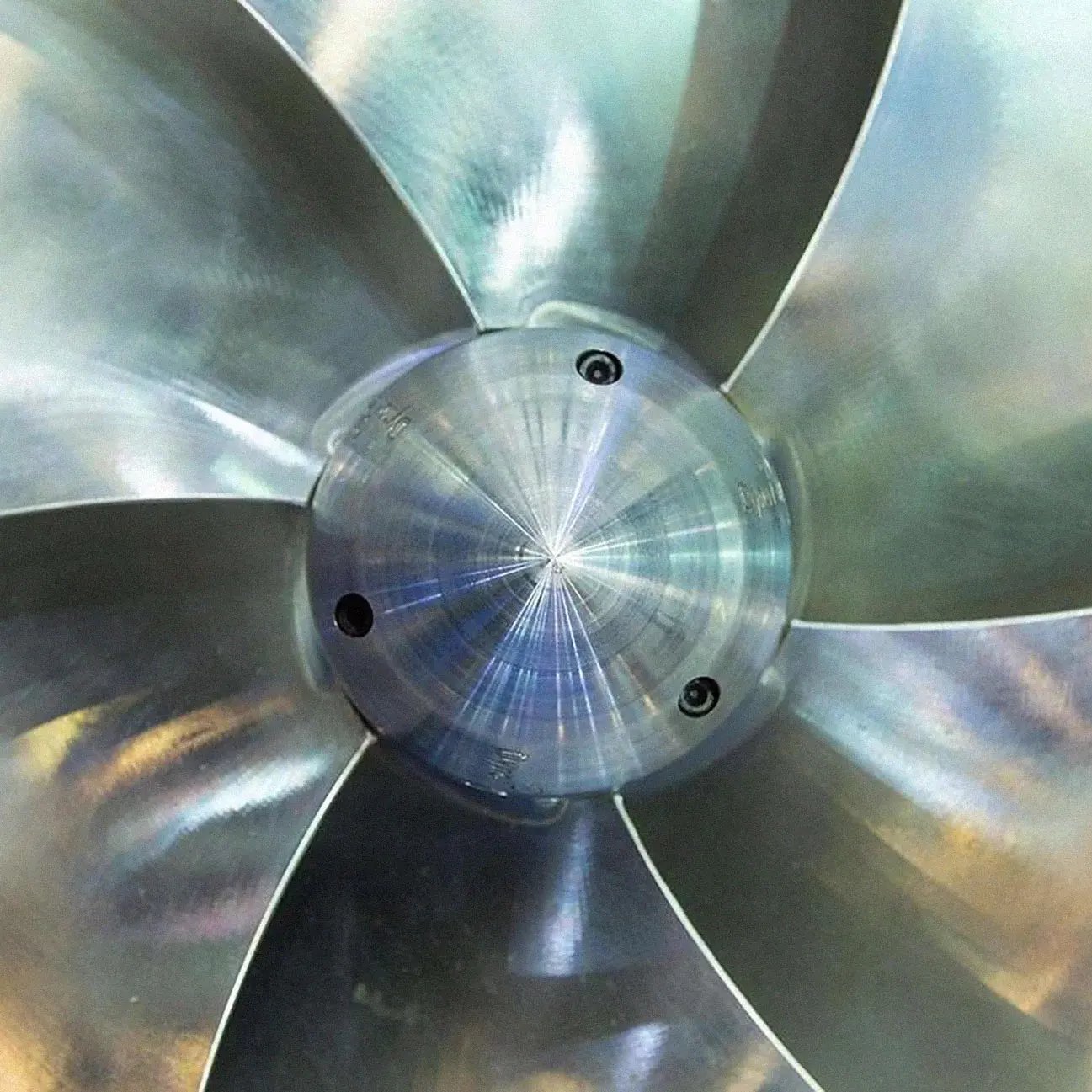
While we don’t design engines, we work extensively at the systems integration level on propulsion, including propeller and propeller shaft design and the platform-level algorithms that manage how propulsion interacts with the rest of the vessel. Propulsion is one of the most sensitive areas of any submarine programme – which limits how much detail we can set out publicly – but our role typically sits at the interface between propulsion performance and overall platform behaviour; this ensures that the two are engineered together, rather than in isolation. Our propeller shaft design work has included producing optimised designs that improve mechanical performance while meeting the safety and reliability standards the platform demands.
Modelling
Dynamic systems modelling
Simulation and control
Our Simulation and Control capability underpins everything described above. We build integrated models of marine systems and their operating environments, spanning offline tools for performance and safety analysis through to real-time simulation for training and hardware-in-the-loop testing. Understanding surface and sub-surface vessel dynamics allows us to develop control laws with confidence before they’re ever tested on a physical platform, and to validate them through software-in-the-loop and hardware-in-the-loop environments ahead of sea trials.
Structural and fluid dynamics
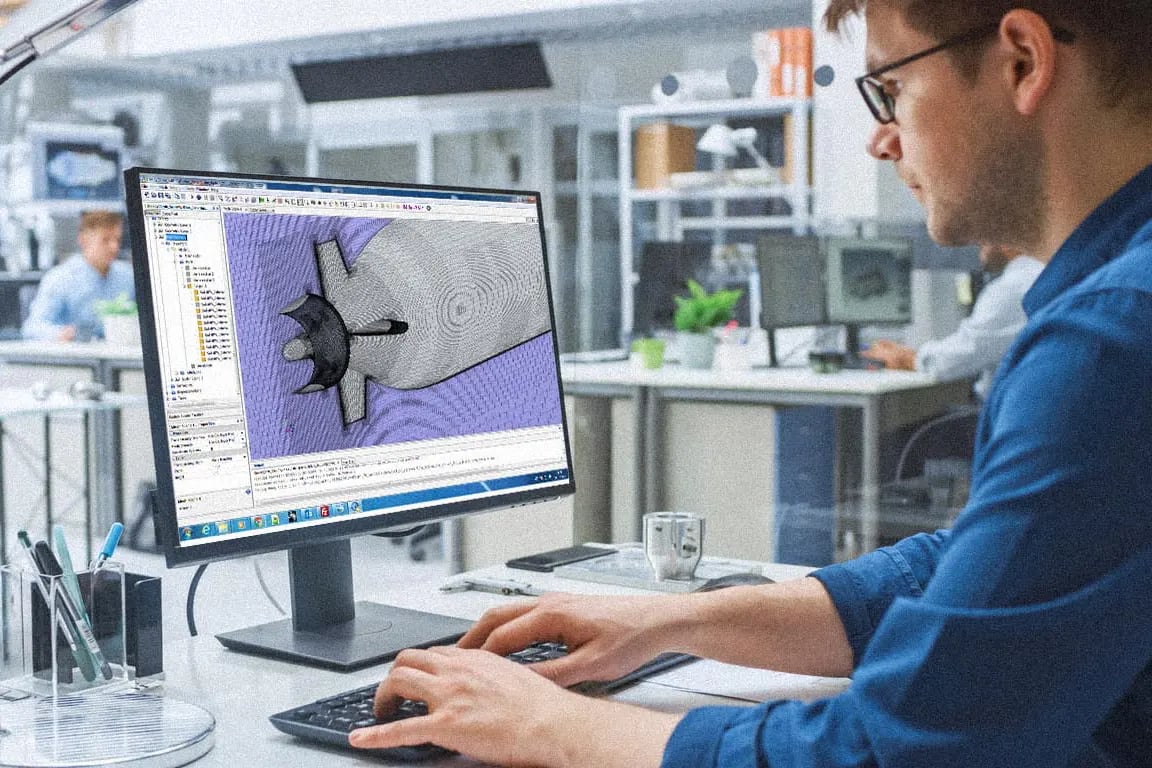
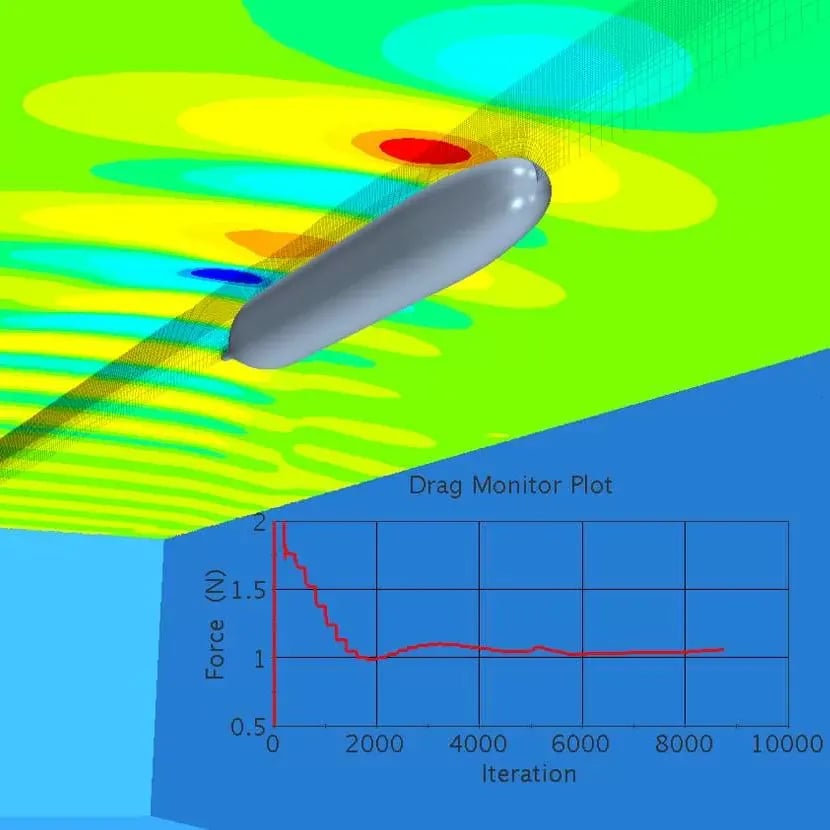
Our Structural and Fluid Dynamics group brings computational fluid dynamics and empirical hydrodynamic methods together with structural modelling, allowing us to analyse complex behaviours above and below the surface, from hydrostatics and sea state effects to fluid-structure interaction across a range of platform types.
Safety
Systems and safety
Submarine control systems are developed with the same rigour applied in aerospace, with validation and verification built in from the first customer conversation rather than retrofitted later.
Thousands of sensors feed into a single integrated system, often in GPS/GNSS-denied conditions that demand advanced inertial and sensor fusion techniques, and our Systems and Safety group manages that complexity from requirements definition through to full boat-level safety assessment.
That assessment is built on Def Stan 00-56, the UK defence standard governing how safety is managed and demonstrated across a system’s lifecycle, covering:
hazard identification
risk assessment
ALARP justification
the safety case a submarine programme depends on.
We structure that work against ISO/IEC/IEEE 15288 so our systems engineering activity sits inside the wider lifecycle framework a customer is already running, rather than as a parallel process alongside it.
Where a submarine system’s complexity and safety criticality call for it, we apply the same FHA, FTA and CCA discipline developed under ARP4754A and ARP4761 in aerospace, alongside IEC 61508, the base functional safety standard for electrical, electronic and programmable electronic systems.
Standards
Def Stan 00-56
Defence safety
ISO/IEC/IEEE 15288
Systems lifecycle
ARP4754A · ARP4761
Aerospace safety
IEC 61508
Functional safety
Bringing that aerospace-honed safety assurance method to marine platforms means failure modes and safety implications are understood and designed against from the outset – not identified once a boat-level review is already underway.
Through-life support
Your partner through the whole lifecycle
Programmes don’t end at handover. We support customers:
from requirements definition and boat planning
through design, upgrades, sea trials and operational testing
into obsolescence management as platforms mature.
As a trusted UK sovereign partner, we’ve supported localisation for allied navies and worked across manned and uncrewed platforms, surface vessels and submarines, including novel applications such as active control technology on landing craft.
Modern vessel control reflects decades of that experience distilled into practical engineering. We take complex, safety-critical requirements and translate them into systems that are dependable in practice – not just sound on paper.
Yes, we have built an enviable reputation in submarine autopilots within platform management systems (PMS). Our advanced steering, diving and hover solutions are active across a diverse range of platforms from diesel-electric patrol to the nuclear-powered fleet submarines.
We’ve worked on platforms that include the Royal Navy SSN Class (autopilot), Trafalgar Class (Slow Speed Control); Swiftsure Class (Slow Speed Control); U209 (autopilot); U212A (autopilot); U214 (autopilot); Dolphin AIP (autopilot) and Jangbogo III (autopilot and hover).
Depending on customer and security requirements, we can do either or a blended hybrid of both. We pride ourselves on being extremely agile and flexible.
Absolutely, we can perform an architecture and model the performance so that you can tweak the system design to optimise for the desired functionality and performance needs. We can also develop the systems engineering design to control the system, sensing and measurement solutions to the highest level of safety criticality.
At Stirling Dynamics, and with our parent company Expleo, we work across all these domains and our staff have the opportunity to work in each of them. In fact, many of our team have brought benefits across one domain to serve another. Model-based systems engineering is just one area; we are cross-fertilising the domains and our latest whitepaper Utilising MBSE for Safety-Critical Software can be downloaded here.