



Core capabilities
Mechanical Design
Engineering that starts with what you actually need
Every mechanical design brief arrives wrapped in assumptions. A weight target, a packaging envelope, a preferred interface, a manufacturing process the customer already has in mind. Our job starts before any of that is fixed: understanding what the system genuinely needs to do, and helping you to separate that from what you thought you wanted.
Needs-led engineering
Clarifying what a system needs to do (not just what’s been specified) avoids costly rework later in a programme.
Manufacturable designs, flexible manufacturing routes
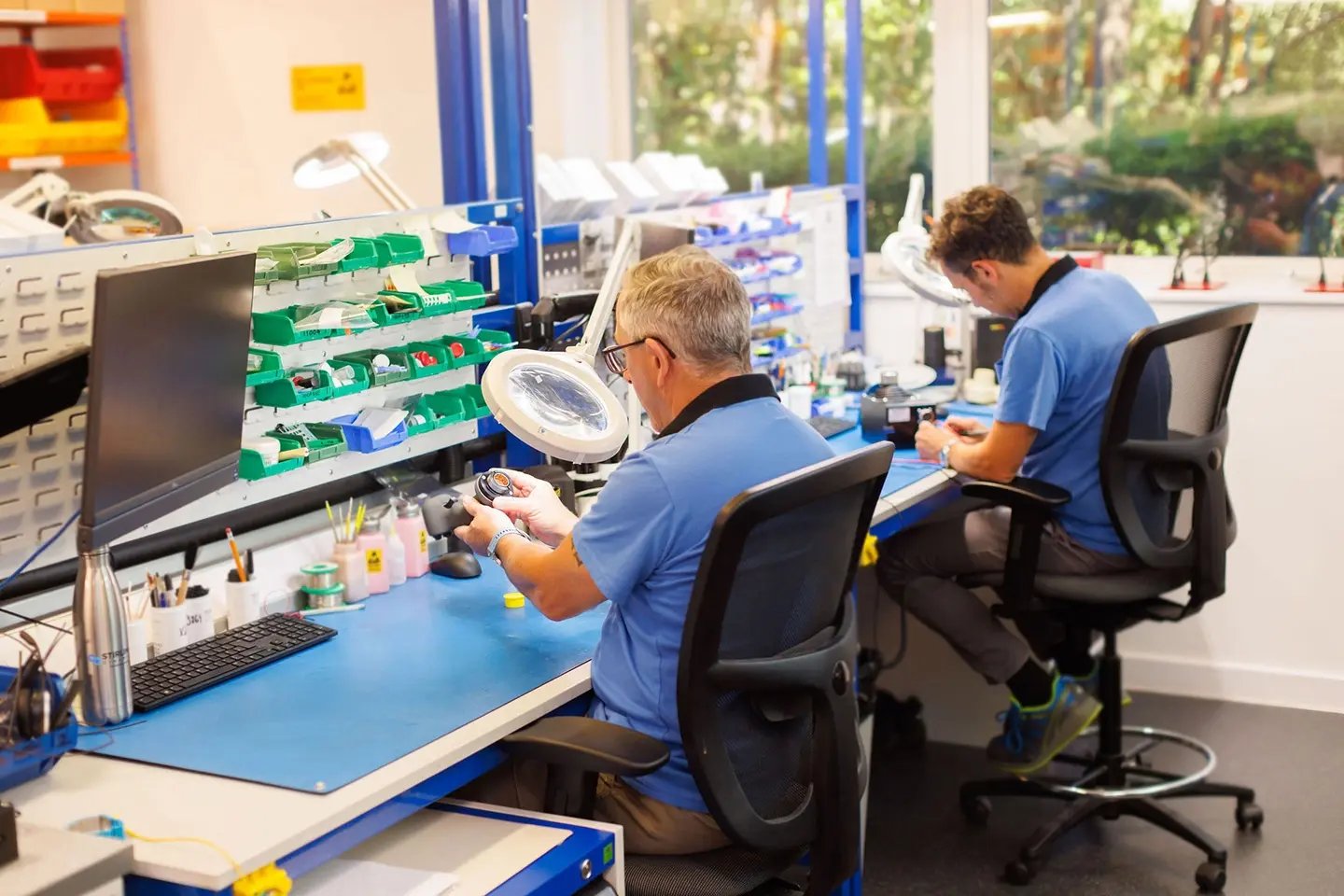
Every design is developed with the machinist, assembler and maintainer in mind, reducing the risk of a ‘correct on paper, difficult in practice’ outcome. With no in-house machining bias, we work with whichever supplier or manufacturing partner suits your programme, including one you’ve already chosen.
Standards-ready output
Design work developed against AS9100, DO-254 and DO-178 (plus regional equivalents) so deliverables slot straight into your qualification process.
Safety and certification built in from day one
Mechanical design decisions are made alongside FHA, FTA and CCA work under ARP4754 and ARP4761, so certification risk is caught at the design stage, not at review.
Toolchain fits your programme, not ours
Fluent in SolidWorks, NX and CATIA, paired with ANSYS and NASTRAN, so you’re not forced onto a platform to work with us.
A team that takes on the hard brief
Broad in-house aerospace and mechanical expertise means we can take on new, high-risk or emerging-market problems (eVTOL, AAM, tight bespoke envelopes) with confidence.
Design for manufacturing, not design then manufacturing
We treat design for manufacture as a first-order engineering constraint – not a review-stage checklist. Our engineers think through a design from the perspective of the people who will actually build it: the machinist working the tolerances, the technician assembling the sub-system, the operator maintaining it in service. That means considering the tooling and assembly equipment a design will require, not just the part itself. And it means a design is finished only when it’s genuinely manufacturable, testable and maintainable – not simply functional on paper.
Aerospace-dominant, not aerospace-only
Aerospace accounts for roughly half our mechanical design work, and it’s the sector our methods, standards and instincts are built around. Flight control inceptors, landing gear, aircraft modification programmes and high-level aircraft design and analysis (spanning aerodynamics and structural modelling) all sit within that core. Recent work has included conversions such as:
- the Boeing 757 testbed programme – involving aerodynamic, structural, nacelle and fuselage changes across a single airframe
- a compact fighter jet simulator inceptor design that had to fit an envelope significantly narrower than anything we had produced previously.
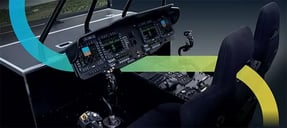
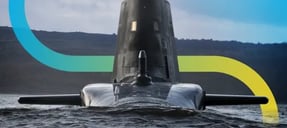
The remaining half of our work applies the same design discipline outside flightworthy hardware: simulator inceptors for flight training, ground-based systems, and an emerging capability in marine and submarine applications, where we’re building on our mechanical and electromechanical strengths.
eVTOL and Advanced Air Mobility customers have become a significant part of our pipeline, often asking us to take simulator-proven concepts through to flightworthy standard. That shift is driving genuinely new interface challenges – three-axis joysticks and novel fly-by-wire control geometries among them – on programmes where certification precedent is still being written. We’re also continuing to develop more sophisticated and integrated simulation solutions as part of that same trajectory, working closely with the customers shaping that space.
A Design House Built for Flexibility
We don’t machine parts in-house. That’s a deliberate position – not a limitation. It means we can work with whichever manufacturing partner suits a programme, whether that’s a supplier of your choosing or a supplier we bring to the table from our own network.
It could also be an intermediary arrangement where we work through your organisation into a partner’s supply chain. We support that relationship through to qualification, transferring the design knowledge a manufacturing partner needs to build with confidence – and we can scale our involvement from early concept work through to full manufacturing documentation.
- SolidWorks
- Siemens NX
- CATIA
- ANSYS
- NASTRAN
That flexibility extends to the software we design in. SolidWorks is our primary platform but our teams work fluently in Siemens NX and CATIA, pairing that with ANSYS and NASTRAN for analysis – so the toolchain fits your programme, rather than the other way round. Testing is handled by specialist partners; our role is to define the requirements clearly enough that testing confirms what the design was meant to achieve.
Standards that underwrite the design, not just the paperwork
Every mechanical design we produce is developed against the standards our customers need to certify and qualify against: AS9100 for quality management, DO-254 for airborne electronic hardware assurance, DO-178 for software considerations in airborne systems, alongside the European, American and Japanese standards a specific programme calls for.
Where reverse engineering is required, typically for legacy or low-volume components where original OEM data no longer exists, we bring genuine depth. Work on platforms (including the Mirage 2000) sits behind that capability, and it remains available where a programme needs it, even where it isn’t the primary focus of current work.
- AS9100
- Quality management
- DO-254
- Airborne electronic hardware
- DO-178
- Airborne software
- Regional
- European · American · Japanese
Engineering Problems Worth Solving
Recurring challenges in aerospace mechanical design are rarely a mystery: stringent weight budgets, packaging envelopes that seem to shrink with every design iteration, and bespoke requirements that rule out an off-the-shelf answer. What varies is whether a team is willing to sit with those constraints long enough to find a genuine solution, rather than a compromise.
Our fighter jet simulator inceptor programme is a fair example – an envelope narrower than anything we’d delivered before. It was initially assessed as extremely difficult, and resolved through iteration rather than assumption.
That willingness to take on the difficult brief is part of what defines us. We’re a team with a genuinely broad range of mechanical and aerospace expertise covering almost any aspect of aircraft design, and that range is deliberate: it keeps engineers engaged, and it means we rarely have to say no to a programme because it falls outside our comfort zone.
This combination of technical breadth and a genuine willingness to engage with novel problems matters a great deal – especially in emerging markets where certification precedent is thin and requirements are still being defined.
If you’re weighing up a mechanical design partner beyond a shortlist built purely on prior product experience, that’s usually where the conversation is worth having – not just what we’ve built before but how we think through what needs building next.
Olivier De Meerschman
Mechanical Design, Technical Manager
The Mechanical Design team delivers end-to-end solutions for complex, performance-critical systems. From conceptual architecture and detailed 3D design through prototyping, verification and transfer to production, the team specialises in creating robust, manufacturable mechanical designs that meet demanding requirements.
Our approach combines rigorous systems thinking with hands-on engineering: model-based design and multi-body/finite-element analysis inform fast iteration; reverse engineering, DFx and DFMEA reduce downstream risk; and early supplier and manufacturing engagement ensures cost-effective and producible designs.

Bring us your challenges
Every mechanical design brief we take on starts with a question – not a spec sheet. If your challenge doesn’t fit neatly into what’s already been built, whether that’s on the wing, in the simulator or beneath the surface, that’s exactly the conversation worth having.


