Services

Obsolescence Management

Solutions Born From Decades of Expertise

Every long-lifecycle platform eventually runs into the same problem: a component that is critical to operations, and a manufacturer that has stopped making it. Obsolescence management is Stirling Dynamics’ answer to that problem, reverse engineering and re-certifying obsolete parts so that aircraft, vessels and systems can keep operating safely well beyond the point where their original supply chain has disappeared.

It is a distinct offering in its own right, though it draws on the same foundations as the rest of our aviation work: our EASA 21J Design Organisation approval and a deep, decades-built network of manufacturing and heritage engineering expertise.

S-Icon-blue
Reverse engineering and re-certification of obsolete components

For platforms that remain in active service long after original production has ended.

S-Icon-blue
EASA Part 21J certification

Lets Stirling work directly with the operator or airline – rather than being dependent on a TC holder’s willingness to support a legacy design.

S-Icon-blue
‘Root cause led approach’ as standard

Aiming to understand why the original part failed rather than simply reproducing it. Like-for-like reproduction is available when it’s what the programme needs.

S-Icon-blue
Decades of platform heritage and access to historical design and manufacturing knowledge

This is what determines whether an obsolescence problem is solvable (not just process or headcount).

S-Icon-blue
A service that stands on its own or surfaces naturally out of a cabin modification programme

Extending beyond cabin scope into electrical, structural and systems components.

S-Icon-blue
Applicability across long-lifecycle platforms in aviation, defence and marine

Wherever a required component has outlived its original supply chain.

Lifecycle

Why obsolescence concentrates where it does

Obsolescence is a function of lifecycle – not age alone. Commercial aircraft such as the Boeing 747 remain profitable for the operators still flying them. But as the fleet shrinks, OEM support for spares becomes economically unviable long before the aircraft themselves are retired. The result is a small, dedicated population of operators facing component unavailability on aircraft that are otherwise entirely serviceable.

Defence and heritage platforms see the same pattern, often more acutely. Service lives are extended for strategic reasons, production runs were smaller to begin with, and platforms frequently change hands between operators over their lifetime, each transfer adding another link to an already thin support chain. The Nimrod, developed from the de Havilland Comet and operated until June 2011, serves as a useful illustration of just how far behind the original production line a platform can end up while still requiring full engineering support. Marine and submarine platforms follow a similar logic with extended-service vessels facing the same supply gap.

Stirling-Dynamics-engineering-measurement-bearings-1000x667px
In practice

Obsolescence problems in practice

Obsolescence rarely announces itself as a strategic issue. It usually turns up as a specific, urgent problem.

A large but ageing airliner with too many unserviceable toilets cannot fly, because toilets are a Minimum Equipment List item, and a grounded long-haul aircraft needs a fix within hours, not months – however trivial the part might look.

A cabin layout change on a regional jet can stall entirely if the business class seats specified simply are not available to buy, at which point what started as a modification project becomes an obsolescence problem in its own right.

Both examples point to the same underlying issue: a supply chain has closed but the operational requirement has not.

Reverse engineering

What good reverse engineering depends on

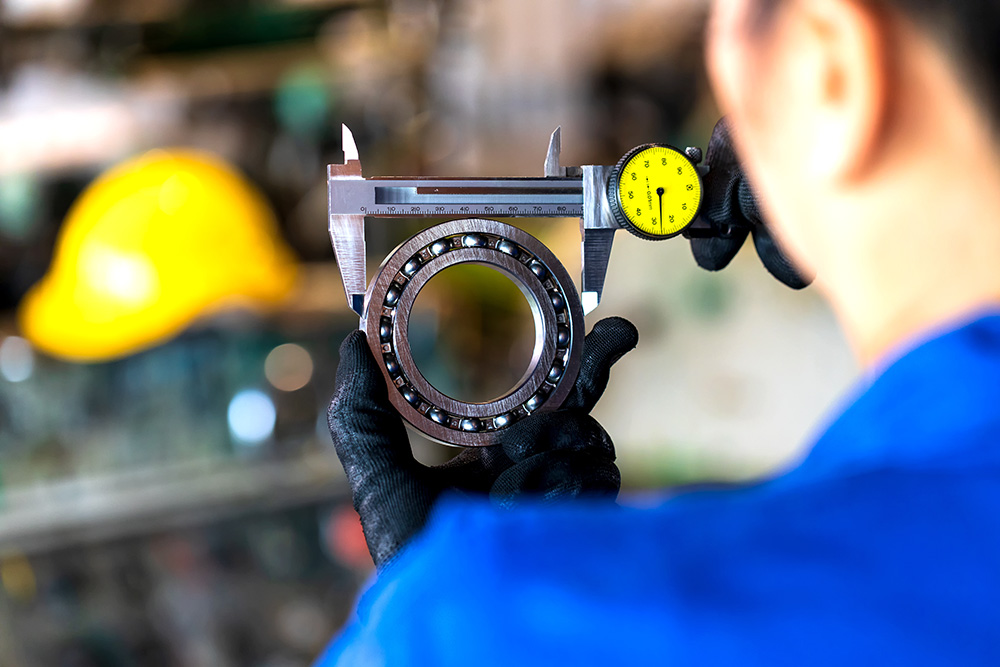
The quality of a reverse engineering outcome is set almost entirely by the quality of what we are given to work from. The best starting point is a physical example of the component itself, which allows material composition, tolerances and (where relevant) electrical architecture to be established directly through testing rather than inferred.

OEM drawings or technical data (where available) materially reduce the guesswork involved and clarify original design intent. Where only a failed or degraded unit is available, the picture is more difficult but far from hopeless – and a broken part is frequently more useful than an intact one, because failure modes reveal exactly where and why the original design fell short.

Material specification

What we cannot do is manufacture certainty from nothing; material specification in particular is proprietary information that OEMs rarely disclose, so without a physical sample to test, sourcing the right material becomes a matter of careful engineering judgement rather than a lookup.

Your choice

Like-for-like or root cause: The choice is yours

Like-for-like

There are two credible ways to replace an obsolete part, and both have their place. A like-for-like reproduction, matching the original in form, fit and function under a new part number, is the fastest route back into service and the model most familiar from the US Parts Manufacturing Approval (PMA) framework.

Root cause

Our own preference, where the programme allows it, is a root cause approach: understanding why the original component failed or fell short, and using that understanding to deliver a replacement that performs better – not just one that is available. It takes more engineering effort up front, but it tends to reduce failure frequency and lifecycle cost over the part’s remaining service life. This matters most on platforms that are going to be in service for years yet.

EASA Part 21J

Why our EASA part 21J status is essential

Reverse engineering an obsolete part is only useful if the result can be certified, and this is where our independent EASA Part 21J approval earns its keep. Without it, re-certifying a legacy component generally means engaging the original type certificate holder; they may have limited commercial incentive to support a part they no longer manufacture and may not wish to see it replicated by a third party.

DO-254 itself distinguishes between simple hardware, which receives comparatively light scrutiny, and complex hardware, where indeterminate logic paths mean it must be treated with the same rigour as software. That scrutiny increases further with Design Assurance Level, up to DAL A for the most safety-critical functions.

Heritage

Why heritage engineering is the differentiator

Stirling-Dynamics-nose-civil-aircraft-aerospace-engineering-1000x667px

Every obsolete component is, by definition, a novel engineering problem: a part that was designed under assumptions, materials and manufacturing methods that may no longer be current practice. It may be sitting inside a system whose interdependencies still need to be understood in full before a replacement can be certified.

That combination rewards:

  • platform knowledge and historical engineering context built up over a long period
  • access to legacy documentation
  • familiarity with retired manufacturing methods
  • relationships across the aerospace and defence supply chain that take decades to establish.

Four decades of engineering heritage is what makes this work possible at the pace our customers need, and it’s the reason that obsolescence management sits naturally alongside the rest of what we do, rather than as a separate specialism bolted on.

Bring us the part and we will tell you honestly what it will take to bring it back.

If a component critical to your platform has gone obsolete, whether that surfaced during a modification project or turned up as an unplanned MEL grounding, we would rather hear about it early.

Stirling Dynamics New Brand Assets-09

raytheon-logo lockheed-logo kai-logo qinetiq-logo bombardiar-logo hyundai-logo Airbus Logo mits-logo