From the air to the sea, we support complex civil and defence programmes across aerospace, marine and space, helping customers solve critical engineering challenges with confidence.
Ask a large component manufacturer to design your system and you’ll get a solution shaped, at least in part, by what they already make. Ask Stirling Dynamics, and you get a design shaped entirely by what your aircraft actually needs. That distinction – independence from any manufacturing agenda – sits behind everything we do across new aircraft, modification programmes and flightworthy equipment in both civil and military aerospace.
Design free from manufacturer bias.
Every solution is shaped by the client’s actual requirement, not by a proprietary product line – with full IP transferring to the client at the end of the engagement.
End-to-end capability, certified to the highest standards.
EASA Part 21J approval means one team carries a programme from requirements definition through design, verification and certification – backed by rigorous DO-254/DO-178 discipline across the full range of Design Assurance Levels, proven on demanding programmes such as DAL B flight-critical software.
Scope that outstrips expectations.
Design capability spanning full landing gear systems down to small actuators and electronics, all to the same certification discipline – regardless of scale.
A route through when OEM data doesn’t exist.
Reverse engineering as a named specialism, unlocking certification on ageing aircraft, military platforms and passenger-to-freighter conversions that would otherwise stall.
Certification experience ahead of the curve on emerging platforms.
Proven eVTOL and Advanced Air Mobility flight demonstration experience, plus original engineering solutions, applied as the regulatory landscape evolves around new technology.
A team that scales to the engagement.
Direct, responsive engineering access whether the need is a single component fix or full capacity augmentation for a large prime contractor.
Independence
Design without an agenda
We hold no proprietary product line to protect. Every design starts from the customer’s requirement – not from a portfolio we’re incentivised to sell into. That matters most where off-the-shelf answers don’t exist:
Business jets needing genuinely bespoke systems
Novel military applications with highly specific performance demands
Clean-sheet Advanced Air Mobility platforms with no established precedent
Full IP transfer
Full intellectual property transfers to the customer at the end of every engagement, so what you’re left with is a design blueprint you own outright – not a dependency on us.
Certification
Full lifecycle, properly certified
Stirling Dynamics holds EASA Part 21J Design Organisation approval (EASA.21J.807), which lets us support a programme end to end: requirements definition, design, verification and validation, through to certification itself. For an organisation of our size, around 170 engineers, that full-scope capability is unusual. Most consultancies of comparable size specialise in one stage of the lifecycle and hand the rest elsewhere. We don’t need to – we can handle it all.
That capability is backed by rigorous compliance discipline across DO-254 for hardware and DO-178 for software, spanning the full range of Design Assurance Levels from DAL D through to the most demanding DAL A.
In practice
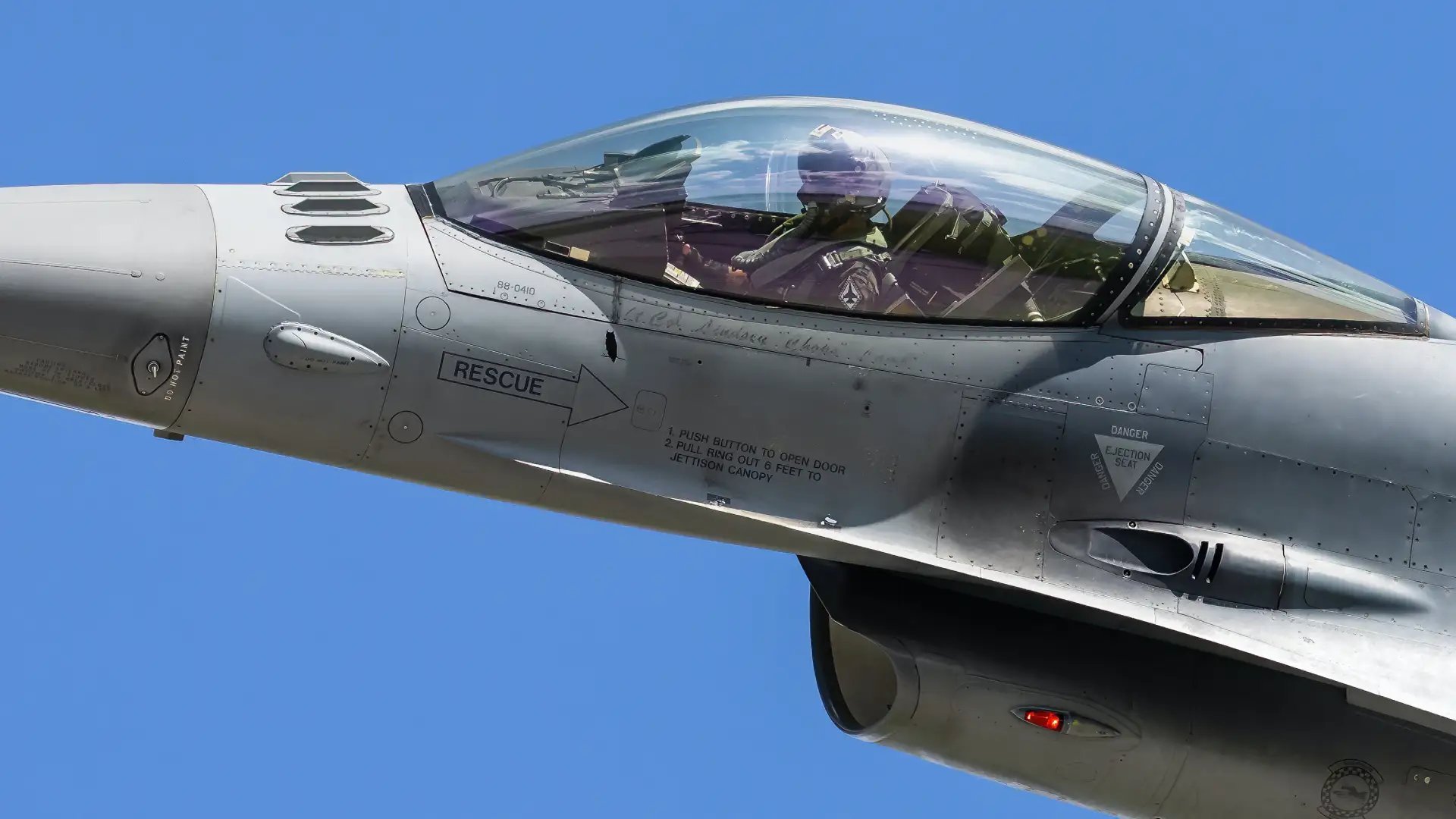
Our work on nose wheel steering software and algorithms for the KF-21 fighter programme – developed to DO-178 at DAL B – is a useful illustration of what that discipline looks like in practice on a genuinely safety-critical system.
Scope
Broader scope than expected
There’s a common assumption that a firm our size might be too small for complex, flightworthy work such as landing gear systems – but in reality the opposite is true. Our design scope runs from large structural systems and complete landing gear installations through to mid-scale products such as flight control sticks and cabin interior components, down to small electro-mechanical actuators and specialist electronics – all engineered to the same DO-254/DO-178 discipline regardless of scale. Being a smaller organisation doesn’t limit that breadth; if anything, it’s what makes it possible, since decisions get made quickly and engineers work directly on the problem rather than through layers of process.
Landing gear
We’re recognised as the UK’s leading independent landing gear specialist, having worked on more than 70 aircraft types over more than 30 years.
A significant proportion of modification and upgrade work starts from a gap: no usable OEM data. It happens on ageing aircraft, on military platforms where original data was never released or has since been restricted, and on passenger-to-freighter conversions where the airframe’s true structural baseline simply isn’t documented anywhere accessible. Reverse engineering is a named specialism here, not an occasional workaround. We’ve applied it to establish structural baselines on modification programmes where no other route to certification existed (including full reverse engineering of a Mirage 2000 airframe) and it routinely underpins the freight floor and cargo door structural certification work we carry out on passenger-to-freighter conversions. Without this capability, some of these certification programmes simply couldn’t proceed.
Certification
Where the industry is heading
Advanced Air Mobility
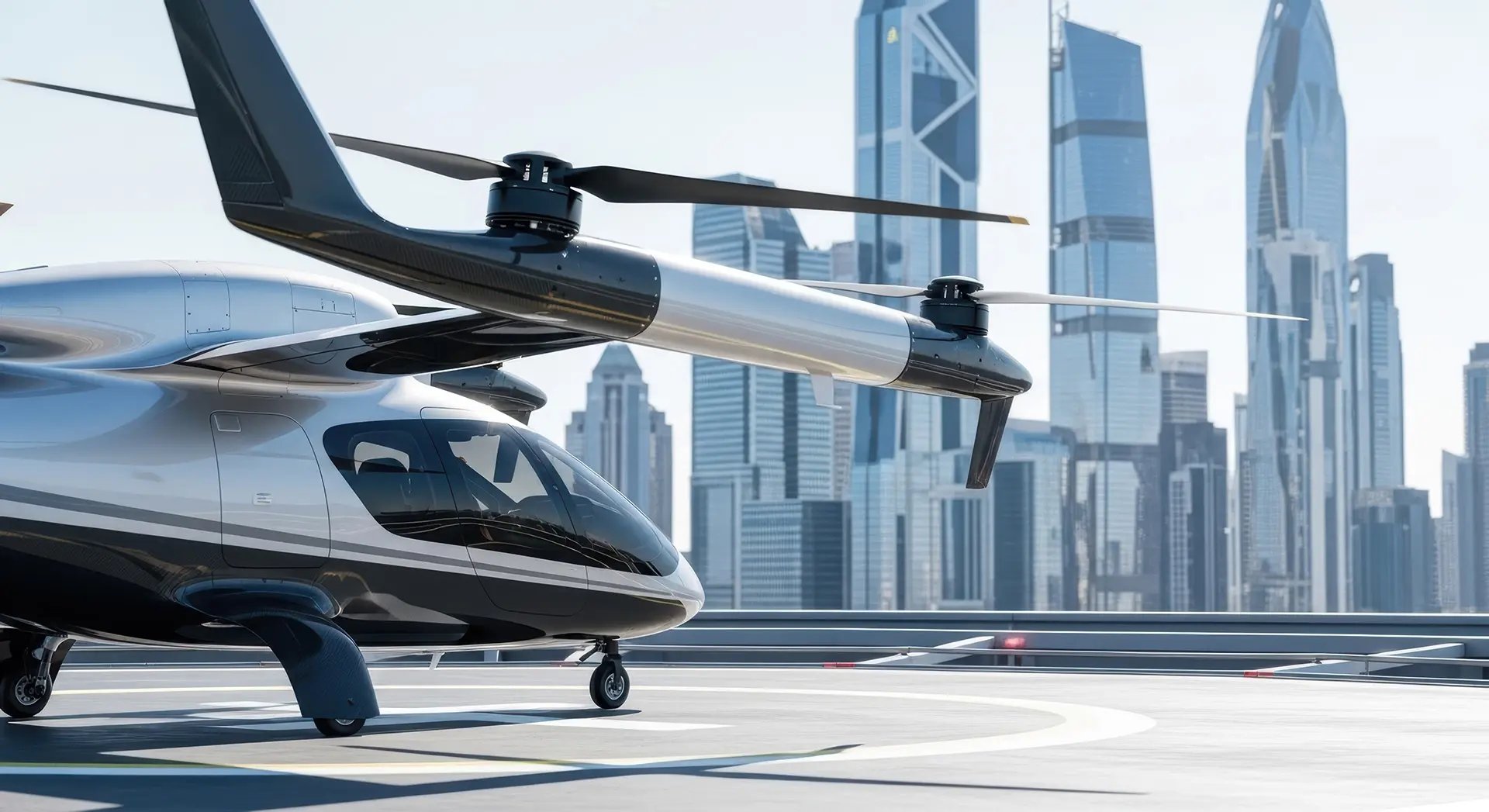
Advanced Air Mobility is redrawing what certification has to account for. We’ve taken novel eVTOL platforms from early concept through to demonstrated flight. This includes a silent, tilt-rotor aircraft shown transitioning from vertical lift into forward flight at the Farnborough Airshow. And we’ve developed original engineering solutions along the way, such as fixed front landing gear camera systems with active oscillation control. Regulators are adapting quickly, and EASA’s performance-based certification model remains the benchmark that other authorities (including the FAA) are increasingly moving towards. Having certification experience that predates this shift, rather than experience built solely around it, is a genuine advantage when guiding a novel platform through to approval.
Novel and modified military aircraft
The same applies to novel and heavily modified military aircraft. Complex structural modification programmes, load and fatigue analysis on adapted airframes, and flight test support through to full certification are areas where deep aerospace design experience, rather than manufacturer bias, is what actually gets a programme through.
How we work
Scaled to the engagement, not the invoice
Not every engagement looks the same, and we don’t try to make it look that way. A specific component issue, a particular actuator, a piece of electronics, tends to be resolved engineer to engineer, quickly and without ceremony. A major modification or upgrade programme, a passenger-to-freighter conversion or a business jet update, naturally involves programme and business-level decision-making on the customer side, given the scope and investment involved. Capacity augmentation for a large prime sits somewhere else again: typically an engineering-level decision to offload overflow work to a trusted team without the overhead of managing a large contractor group. We work comfortably at whichever level the engagement actually calls for – rather than defaulting to a single model regardless of scope.
Engagement levels
Component issue
Engineer to engineer
Modification or upgrade programme
Programme and business level
Capacity augmentation
Engineering-level decision
Regulation
A regulatory landscape in motion
EASA
China
Net zero
EASA’s performance-based certification framework remains the model that other authorities are moving towards, helping to foster a more harmonised global standard. China is taking a different path entirely, developing regulation alongside emerging technology, particularly in eVTOL, rather than retrofitting rules to catch up with it afterwards (though its regulators are gradually aligning more closely with the EASA approach over time). Meanwhile, the industry’s net-zero commitments are reshaping what gets designed in the first place, driving renewed interest in electric and hydrogen propulsion (with a resurgence of seaplane platforms). Wherever the regulatory and technical landscape moves next, our deep independent design experience remains the constant that makes navigating it possible.
Clients tell us they value speaking directly to the engineer working on their problem, not navigating account layers to get there. That responsiveness works for smaller OEMs needing a specific discipline they couldn’t justify staffing in-house and equally for large primes looking to offload overflow work quickly without managing a large contractor team themselves.
Either way, the team scales to the problem rather than the other way round, and clients including Hanwha, Bombardier, Luxair, Draken Europe and WheelTug have all cited that responsiveness directly.
Whatever stage your programme is at – from early concept through to a certification submission – we’d like to hear about it.
Over the last 30+ years, Stirling Dynamics has worked on over 70 different aircraft types and has played key roles in many of the major aircraft development programmes. These programmes include the F-35 Lightning II, Airbus Single Aisle Family, Widebody Family, A350, A400M, Bombardier C-Series and Global 7000/8000, Leonardo helicopter fleet and many others.
Absolutely. Due to a very well-developed set of communication tools and reporting processes, the majority of our work can be carried out very successfully from our UK and German offices, regardless of client location. Additionally, engineers are deployed all around the world and have provided direct, on-site team augmentation and knowledge transfer.
Depending on customer requirements, we can do either or a blended hybrid of both. We pride ourselves on being extremely agile and flexible. The delivery of our services, from short term to more involved programmes, is achieved by employing a range of business models including on-site support, time-and-materials, and fixed-price packages.
Additionally, due to a very well-developed set of communication tools and reporting processes, the majority of our work can be carried out very successfully from our offices, regardless of client location.
We are well versed using industry standard and specialist tools. Additionally, we have developed an independent suite of tools that enable us to calculate ground, flight, and component loads, and also specialist tools for flutter and shimmy analysis.
Yes, we can. In fact, reverse engineering is one of our specialisms. Some complex programmes require a wide range of these skills to ‘reverse-engineer’ an aircraft model from sparse data sets. We are often approached to support aircraft design and modification programmes where original OEM data is unavailable or prohibitively expensive. Our niche capabilities and experience enable us to recreate accurate data for a fraction of the cost of purchasing from the original OEM.